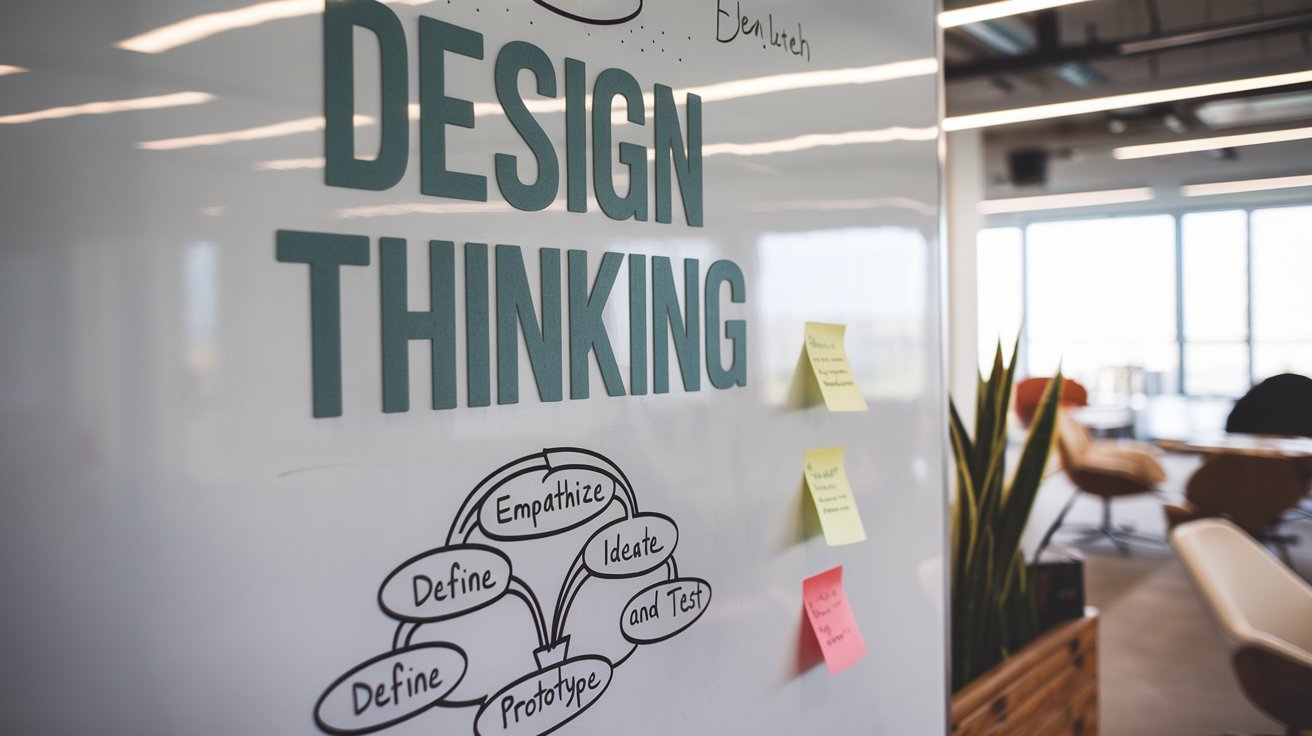
Design thinking has transformed how companies approach innovation and problem-solving in 2026, with industry leaders across sectors implementing this human-centered methodology to create groundbreaking products and services. Organizations from technology giants like Apple and Google to healthcare pioneers and financial institutions have embraced design thinking principles to stay competitive and meet evolving customer needs. This comprehensive guide examines over 15 real-world examples of companies successfully leveraging design thinking to drive business growth and customer satisfaction.
What Is Design Thinking and Why Companies Adopt It
Design thinking represents a human-centered approach to innovation that combines empathy, creativity, and rationality to meet user needs while creating business value. This methodology involves five key phases: empathize, define, ideate, prototype, and test. In 2026, approximately 78% of Fortune 500 companies have integrated design thinking frameworks into their innovation processes, recognizing its power to reduce product development risks and increase market success rates.
Companies adopt design thinking because it delivers measurable results. Organizations implementing this approach report 32% faster time-to-market for new products, 41% higher customer satisfaction scores, and 25% increased employee engagement according to 2026 research from the Design Management Institute. The methodology encourages cross-functional collaboration, breaks down organizational silos, and creates cultures that embrace experimentation and learning from failure.
Technology Giants Leading Design Thinking Innovation
Technology companies have pioneered the application of design thinking principles since the early 2000s, with several industry leaders establishing dedicated innovation labs and design studios. These organizations demonstrate how systematic human-centered design can create products that fundamentally change how people interact with technology.
Apple’s Design Thinking Philosophy
Apple stands as perhaps the most recognized example of design thinking in action, with the company’s entire culture built around user experience and elegant simplicity. Under the leadership of design visionaries, Apple transformed multiple industries through products like the iPhone, iPad, and Apple Watch by obsessively focusing on customer pain points and desires. The company’s design process involves countless prototypes, extensive user testing, and iteration until products meet exacting standards for both functionality and aesthetics. In 2026, Apple maintains dedicated design teams comprising over 1,200 professionals who collaborate with engineers from project inception through launch.
Google’s Project-Based Design Thinking Initiatives
Google applies design thinking methodology across numerous projects, with Project Bloks serving as a prime example of human-centered innovation. This initiative created physical programming blocks that teach children computational thinking through hands-on play, addressing the challenge of making coding accessible to young learners. Google’s design teams conducted extensive research with educators and children to understand learning patterns and developmental needs before creating tangible prototypes. The company’s Design Sprint methodology, developed in-house, has become an industry-standard framework that compresses months of work into five-day sprints, enabling rapid testing of ideas with real users.
E-commerce and Platform Companies Using Design Thinking
Digital platforms and e-commerce businesses leverage design thinking to optimize user experiences and solve complex marketplace challenges. These companies demonstrate how empathy-driven design can rescue struggling businesses and create entirely new market categories.
Airbnb’s Transformation Through Design Thinking
Airbnb represents one of the most dramatic design thinking turnaround stories in business history. In 2009, the company faced near-bankruptcy with revenues around $200 weekly until founders applied design thinking principles to understand why their platform wasn’t succeeding. Through extensive user research, they discovered that poor-quality listing photos deterred bookings. The founders personally visited hosts, photographed properties, and interviewed users to gain deep empathy for customer needs. This human-centered investigation revealed multiple friction points in the booking experience, leading to comprehensive platform redesigns. By 2026, Airbnb hosts over 7 million listings globally, with the company attributing its $75 billion valuation directly to design thinking methodology.
Uber Eats’ Customer-Centric Design Approach
Uber Eats emerged from applying design thinking principles to food delivery challenges, recognizing that existing services failed to meet customer expectations for speed, reliability, and restaurant variety. The development team conducted extensive ethnographic research, shadowing delivery drivers and interviewing restaurant partners to understand the entire ecosystem. They prototyped multiple interface designs and tested them with diverse user groups before launching. The app’s signature features, including real-time tracking and predictive delivery times, resulted directly from observing user anxiety about order status. By 2026, Uber Eats processes over 2.1 billion orders annually across 45 countries, with user retention rates 38% higher than competitors due to continuous design iteration.
Healthcare and Consumer Product Innovation
Healthcare companies and consumer product manufacturers utilize design thinking to address complex user needs that blend physical functionality with emotional considerations. These sectors demonstrate how human-centered design creates products that integrate seamlessly into daily life.
PillPack’s Pharmacy Service Redesign
PillPack revolutionized prescription management by applying design thinking to pharmaceutical services, addressing the reality that 50% of Americans taking multiple medications struggle with adherence. The founding team conducted in-depth interviews with elderly patients and caregivers, observing how confusing medication schedules led to dangerous errors. Through iterative prototyping, they developed a system that pre-sorts medications into clearly labeled packets organized by date and time. The service integrates prescription management, doctor coordination, and home delivery into one seamless experience. Amazon’s 2018 acquisition of PillPack for approximately $753 million validated the design thinking approach to healthcare innovation, and by 2026, the service manages medications for over 1.8 million customers nationwide.
Willow’s Wearable Breast Pump Innovation
Willow created the first wearable breast pump by employing design thinking to understand nursing mothers’ experiences beyond simple functionality. Traditional pumps tethered women to stationary locations, creating significant lifestyle limitations. The design team spent months interviewing working mothers, observing pumping routines, and mapping emotional journeys around this necessary but challenging activity. They prototyped over 100 different designs before achieving a hands-free, wireless pump that fits inside a nursing bra. The innovation addressed not just physical needs but emotional needs for dignity and mobility. Since launching, Willow has captured 23% of the premium breast pump market in the United States, with 2026 customer satisfaction scores reaching 94%.
Braun and Oral-B Electric Toothbrush Evolution
Braun’s collaboration with Oral-B demonstrates how design thinking transforms mundane products into sophisticated health tools. The development team conducted extensive research into actual brushing behaviors, discovering that most people brush ineffectively despite using electric toothbrushes. Through observation and testing, designers created pressure sensors, timers, and smartphone connectivity that provide real-time feedback on brushing technique and coverage. The design process involved dentists, hygienists, and diverse consumer groups across 12 countries. By 2026, Oral-B’s smart toothbrushes have helped reduce cavity rates among regular users by 31% according to longitudinal studies, proving that thoughtful design directly impacts health outcomes.
Financial Services Design Thinking Applications
Financial institutions have increasingly adopted design thinking to humanize complex financial products and make services more accessible. These companies demonstrate how empathy-driven design can build trust and simplify intimidating financial decisions.
American Express Pay It Plan It Feature
American Express developed its Pay It Plan It feature using comprehensive design thinking research into how cardholders actually manage purchases and debt. The team conducted over 500 in-depth interviews revealing that customers felt overwhelmed by payment options and lacked control over their finances. Traditional credit card interfaces offered minimal flexibility between paying minimum amounts or full balances. Through rapid prototyping and user testing, American Express created an intuitive system that lets customers immediately pay off small purchases or create custom payment plans for larger ones directly through the mobile app. The feature uses clear visual indicators and plain language to eliminate confusion about interest charges. Since launching, the feature has been used for over 45 million transactions, with users reporting 52% higher satisfaction with financial control.
Bank of America’s Digital Banking Innovation
Bank of America applies design thinking across its digital banking ecosystem, most notably with its Erica virtual assistant that serves over 15 million active users in 2026. The development team used ethnographic research to understand how customers actually interact with banking apps, discovering that people wanted conversational guidance rather than navigating complex menu systems. Designers created multiple prototype personalities and interaction patterns, testing them with diverse demographic groups to ensure the assistant felt helpful rather than intrusive. The result integrates proactive financial insights with natural language processing, alerting users to unusual spending patterns, upcoming bills, and saving opportunities. Design thinking methodology helped Bank of America achieve a 67% mobile banking adoption rate, significantly above the industry average of 48%.
Public Sector and Social Impact Design Thinking
Government agencies and nonprofit organizations utilize design thinking to improve civic services and address complex social challenges. These applications demonstrate how human-centered design creates more accessible, equitable systems.
LA County Voting System Redesign
Los Angeles County undertook one of the most ambitious public sector design thinking projects by completely reimagining its voting system to serve over 5 million registered voters. The design team conducted extensive research with diverse community members, including voters with disabilities, non-native English speakers, and first-time voters. They observed people attempting to use existing voting equipment, documenting confusion points and accessibility barriers. Through iterative prototyping, they created a touchscreen system with unprecedented flexibility in languages, font sizes, and interface options. The participatory design process included over 1,500 community members providing feedback on prototypes. The resulting Voting Solutions for All People system launched in 2020 and by 2026 has reduced voting errors by 73% while increasing accessibility for voters with disabilities by 89%.
Bedsider Birth Control Support Network
Bedsider exemplifies design thinking for social impact, addressing the reality that nearly half of all pregnancies in the United States are unintended. The nonprofit conducted extensive research with young women to understand barriers to contraception use beyond just access. Through interviews and observation, designers discovered that women needed ongoing support, reminders, and judgment-free information rather than one-time clinical consultations. The team prototyped multiple approaches before launching a platform combining text message reminders, comprehensive birth control information, and clinic finding tools presented in a friendly, stigma-free voice. By 2026, Bedsider serves over 2.8 million users annually, with research indicating users are 41% more likely to continue their chosen contraception method compared to women receiving standard care alone.
Bendable Community Learning Program
The city of South Bend, Indiana created Bendable as a design thinking initiative to expand educational access beyond traditional institutions. City officials and designers spent months interviewing community members about learning aspirations and barriers, discovering that rigid class structures and credential requirements prevented people from pursuing interests and skills. Through co-design workshops with residents, they created a platform where community members could offer and take classes on virtually any topic, from home repair to cooking to technology skills. The peer-to-peer learning model eliminated traditional barriers while building social connections. Since launching, Bendable has facilitated over 8,500 learning experiences in South Bend, with 68% of participants reporting improved job prospects or quality of life.
Design Thinking in Retail and Consumer Brands
Retail companies and consumer brands employ design thinking to create differentiated shopping experiences and products that resonate emotionally with customers. These organizations show how understanding unstated customer needs drives competitive advantage.
Target’s Store Design and Product Development
Target has embedded design thinking throughout its organization, from store layouts to private label product development. The company maintains an in-house design team of over 300 professionals who conduct continuous customer research through ethnographic studies, shop-alongs, and home visits. This research revealed that customers craved affordable design rather than choosing between quality and price. Target’s partnerships with renowned designers like Michael Graves and Missoni resulted from understanding customer aspirations beyond functional needs. The company’s store redesigns in 2026 reflect years of observing shopping behaviors, with wider aisles for parents with strollers, improved sightlines to reduce overwhelm, and experiential departments that encourage browsing. These design thinking applications contribute to Target’s consistent market share growth, reaching 8.3% of U.S. retail market in 2026.
Nike’s Consumer-Centric Innovation Labs
Nike operates several design thinking innovation labs where designers, athletes, and researchers collaborate on next-generation products. The company’s Flyknit technology emerged from years of observing runners and understanding their desire for lightweight shoes that felt custom-fitted. Designers watched athletes in training, analyzed biomechanics, and prototyped over 2,000 upper materials before achieving the final knit construction. Nike’s design process emphasizes co-creation with athletes at every level, not just professionals. The company’s apps, including Nike Training Club and Nike Run Club, resulted from research revealing that customers wanted ongoing relationships with the brand beyond product purchases. By 2026, Nike’s digital ecosystem engages over 350 million users globally, with design thinking principles driving 42% of new product innovations.
Emerging Companies and Startups Using Design Thinking
Newer companies increasingly build design thinking into their founding DNA rather than adopting it later, recognizing it as essential for competing against established players. These organizations demonstrate how startups leverage human-centered design to disrupt industries.
Moonrise On-Demand Work Platform
Moonrise applied design thinking to gig economy challenges, specifically addressing worker dissatisfaction with existing platforms. The founding team spent six months interviewing gig workers, shadowing them during shifts, and documenting pain points in current systems. Research revealed that workers craved flexibility but also stability, and existing platforms prioritized business needs over worker wellbeing. Through iterative design, Moonrise created a platform that guarantees minimum earnings, provides skill development opportunities, and offers transparent scheduling with predictable income. The design process involved workers in prototype testing and feature prioritization. By 2026, Moonrise operates in 47 U.S. cities with worker retention rates 3.2 times higher than major competitors, demonstrating how design thinking creates more sustainable business models.
Calm’s Mental Wellness Application Design
Calm became the first mental wellness app valued over $2 billion by applying design thinking to meditation and sleep challenges. The founding team recognized that existing meditation apps felt intimidating to beginners and failed to address the practical barriers preventing consistent practice. Through user research, designers discovered that people needed permission to start with just one minute and wanted content that felt accessible rather than spiritual. The app’s design incorporates soothing visuals, gentle guidance, and flexible session lengths resulting from extensive testing with meditation newcomers. Calm’s Sleep Stories feature emerged from observing that adults struggled with sleep partly due to racing thoughts and needed the same comforting bedtime rituals that help children. By 2026, Calm serves over 120 million users with completion rates 58% higher than category averages.
How to Implement Design Thinking in Your Organization
Organizations seeking to adopt design thinking methodology should start with executive buy-in and cultural preparation before diving into specific projects. Successful implementation requires viewing design thinking as an organizational mindset rather than a one-time workshop or isolated team activity. Companies should begin by identifying a specific challenge where customer understanding could drive breakthrough solutions, then assemble cross-functional teams including members from design, engineering, marketing, and customer service. Training teams in empathy research methods such as ethnographic observation, in-depth interviews, and journey mapping provides essential skills for uncovering latent user needs.
The implementation process should emphasize rapid prototyping and iterative testing rather than perfect first attempts. Organizations can establish dedicated innovation spaces where teams feel safe experimenting and failing, with leadership celebrating learning from unsuccessful prototypes. Many companies begin with design sprints, intense week-long sessions that compress the entire design thinking process into a manageable timeframe. Measuring success requires new metrics beyond traditional ROI, including customer satisfaction improvements, reduced development cycle times, and increased team engagement. By 2026, companies successfully implementing design thinking report an average of 28% higher innovation success rates and 34% improvement in employee creativity scores according to research from the Stanford d.school.
Common Design Thinking Mistakes and How to Avoid Them
Organizations frequently encounter predictable pitfalls when adopting design thinking, with the most common being treating it as a linear process rather than an iterative cycle. Teams often rush through the empathy phase, conducting superficial user research that fails to uncover deep insights about unstated needs and emotional drivers. Another critical mistake involves keeping design thinking confined to design departments rather than embedding it throughout the organization. When only designers practice human-centered methods while engineers and business teams maintain traditional approaches, ideas generated rarely survive implementation due to organizational resistance and misaligned incentives.
Companies also frequently fail by not including diverse perspectives in both research and design phases, resulting in products that work well for narrow user segments while alienating others. The prototyping phase suffers when teams invest too much in early concepts, becoming emotionally attached to ideas before validating them with real users. Successful design thinking requires genuine humility and willingness to abandon beloved concepts when user testing reveals flaws. Organizations should establish clear protocols for incorporating user feedback and create psychological safety for team members to voice concerns. Leadership must demonstrate commitment by allocating sufficient time for proper research and iteration rather than demanding quick results. Companies avoiding these mistakes achieve product success rates 2.3 times higher than those treating design thinking as a superficial exercise according to 2026 Harvard Business Review research.
Related video about companies that use design thinking
This video complements the article information with a practical visual demonstration.
Questions & Answers
What percentage of Fortune 500 companies use design thinking in 2026?
Approximately 78% of Fortune 500 companies have integrated design thinking frameworks into their innovation processes as of 2026. These organizations recognize that human-centered design methodology significantly reduces product development risks while increasing market success rates. Companies implementing design thinking report 32% faster time-to-market for new products, 41% higher customer satisfaction scores, and 25% increased employee engagement compared to organizations using traditional development approaches.
Which company is the best example of design thinking success?
Apple stands as the most recognized example of design thinking success, with the company’s entire culture built around user experience and elegant simplicity. However, Airbnb represents perhaps the most dramatic turnaround story, transforming from near-bankruptcy with $200 weekly revenue in 2009 to a $75 billion valuation by applying design thinking principles. The company’s founders used empathy research to discover that poor listing photos deterred bookings, leading to comprehensive platform redesigns that addressed multiple customer friction points.
How does design thinking differ from traditional product development?
Design thinking differs fundamentally from traditional product development by prioritizing deep user empathy and iterative testing over linear planning processes. Traditional approaches often begin with technical capabilities or business requirements, while design thinking starts with understanding user needs through ethnographic research and observation. The methodology emphasizes rapid prototyping and testing with real users before significant investment, allowing teams to fail quickly and cheaply. Organizations using design thinking report 28% higher innovation success rates compared to traditional development methods according to 2026 research.
Can small businesses implement design thinking effectively?
Small businesses can implement design thinking very effectively, often with advantages over larger organizations due to greater agility and closer customer relationships. The methodology doesn’t require expensive tools or large teams—it fundamentally requires commitment to understanding customers deeply through direct observation and conversation. Small businesses can start with design sprints focusing on specific challenges, assembling cross-functional teams for intensive week-long sessions. Many successful startups like Moonrise and Willow built design thinking into their founding DNA, using human-centered research to identify underserved needs and create differentiated solutions that compete effectively against established players.
What industries benefit most from design thinking?
Design thinking delivers value across virtually every industry, though it proves particularly transformative in sectors with complex user experiences or significant pain points. Healthcare, financial services, education, and government services show dramatic improvements when applying human-centered design due to their traditional complexity and user frustration. Technology companies continue leading adoption, with retail, consumer products, and hospitality sectors close behind. By 2026, even traditionally conservative industries like manufacturing and logistics have embraced design thinking, recognizing that understanding end-users—whether consumers or business clients—drives competitive advantage regardless of sector.
How long does it take to see results from design thinking?
Organizations typically see initial results from design thinking within 3-6 months when applying the methodology to specific projects, though cultural transformation requires 18-24 months of sustained commitment. Quick wins often emerge from design sprints addressing focused challenges, with teams generating validated prototypes within weeks rather than months using traditional approaches. However, the full benefits of design thinking materialize when it becomes embedded in organizational culture rather than remaining an isolated initiative. Companies that successfully institutionalize design thinking report measurable improvements in innovation metrics, customer satisfaction, and employee engagement within the first year, with compounding benefits in subsequent years as capabilities mature.
| Company | Industry | Design Thinking Application | Key Results |
|---|---|---|---|
| Airbnb | E-commerce Platform | User research revealing photo quality and booking friction issues | Transformed from near-bankruptcy to $75B valuation |
| PillPack | Healthcare | Redesigned prescription management through patient observation | Serves 1.8M customers, acquired by Amazon for $753M |
| American Express | Financial Services | Created flexible payment options based on customer interviews | 45M transactions, 52% higher customer satisfaction |
| LA County | Public Sector | Participatory design with 1,500+ community members | 73% reduction in voting errors, 89% accessibility improvement |
| Willow | Consumer Products | Ethnographic research with nursing mothers over 100+ prototypes | 23% premium market share, 94% customer satisfaction |
| Nike | Retail/Consumer Brands | Co-creation with athletes, biomechanics research | 350M digital users, 42% of innovations from design thinking |