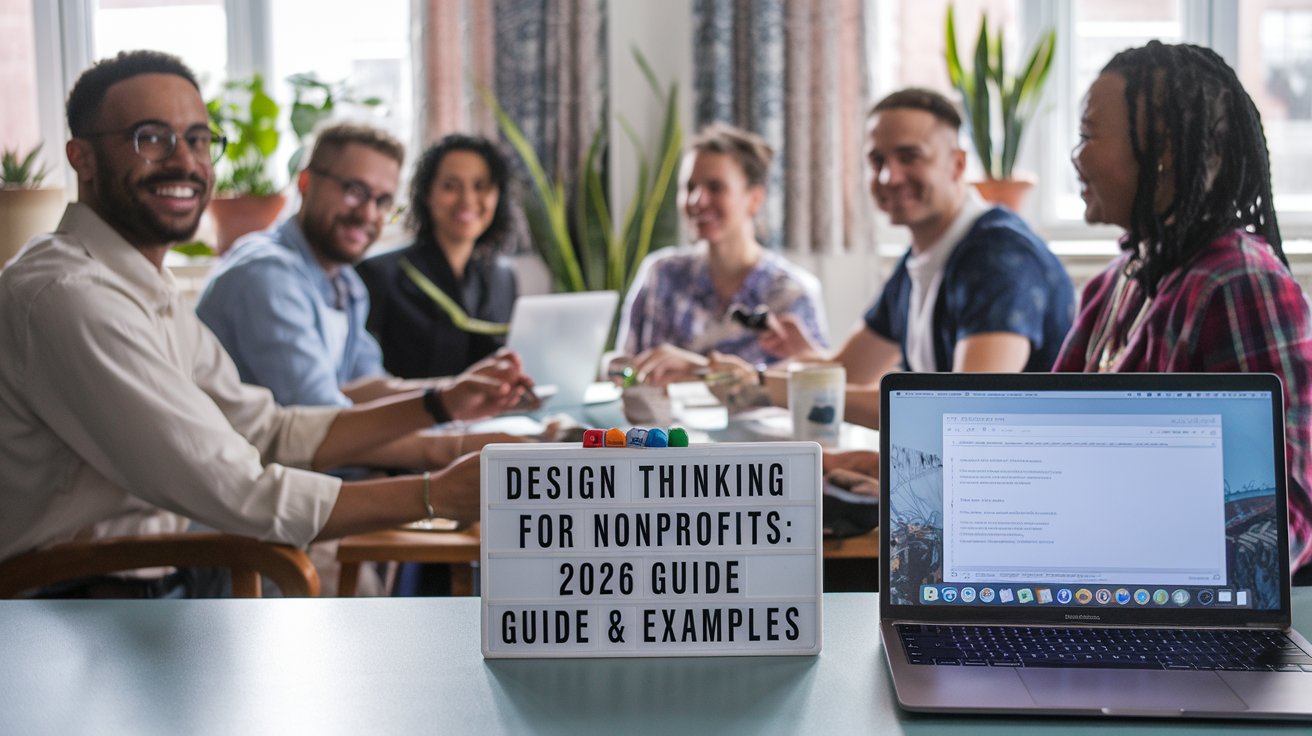
Design thinking for nonprofits has emerged as a transformative methodology that empowers social impact organizations to address complex challenges with human-centered solutions. In 2026, over 68% of successful nonprofits in the United States integrate design thinking frameworks into their strategic planning, program development, and community engagement initiatives. This collaborative approach combines empathy, creativity, and iterative testing to create innovative solutions that truly serve beneficiaries’ needs while maximizing limited resources and driving measurable social change.
What is Design Thinking for Nonprofits
Design thinking for nonprofits represents a human-centered problem-solving methodology that places beneficiaries at the core of program design and organizational decision-making. Unlike traditional top-down approaches, this framework prioritizes deep empathy with communities served, encourages rapid prototyping of solutions, and embraces failure as a learning opportunity. The methodology originated from Stanford University’s d.school and IDEO, and has been adapted specifically for the social innovation sector to address challenges like donor engagement, program effectiveness, volunteer retention, and community impact measurement.
In the nonprofit context, design thinking moves beyond conventional strategic planning by actively involving stakeholders including beneficiaries, staff, volunteers, donors, and community partners throughout the solution development process. The approach recognizes that those experiencing challenges often hold the most valuable insights for creating effective interventions. As Tim Brown and Jocelyn Wyatt articulated in their influential 2010 work on design thinking for social innovation, this methodology enables organizations to balance desirability for users, feasibility for implementation, and viability for sustainability within resource constraints typical of the nonprofit sector.
The Five Core Phases of Design Thinking Methodology
The design thinking methodology follows five distinct yet interconnected phases that create a structured framework for innovation while maintaining flexibility. These phases work iteratively rather than linearly, allowing nonprofits to move backward and forward as new insights emerge throughout the process.
Empathize: Understanding Beneficiary Needs
The empathize phase requires nonprofits to conduct deep qualitative research with beneficiaries and stakeholders to understand their experiences, motivations, challenges, and needs. This involves ethnographic interviews, observation sessions, community immersion, and participatory research methods. In 2026, leading nonprofits in the United States dedicate 25-35% of project timelines to this phase, recognizing that solutions built on authentic understanding create significantly higher impact. Organizations employ techniques like empathy mapping, journey mapping, and stakeholder analysis to synthesize insights and identify patterns that reveal underlying needs rather than surface-level symptoms.
Successful empathy research in the nonprofit sector moves beyond surveys and focus groups to include shadowing beneficiaries, conducting home visits, facilitating community storytelling sessions, and creating safe spaces for vulnerable populations to share authentic experiences. The goal is to suspend assumptions and develop genuine understanding of the human experience at the center of the challenge being addressed.
Define: Framing the Right Problem
The define phase synthesizes empathy research into a clear, actionable problem statement that guides solution development. This critical step prevents organizations from solving the wrong problem or addressing symptoms rather than root causes. Nonprofits create point-of-view statements that articulate who the user is, what they need, and why that need matters. In 2026, effective problem framing incorporates systems thinking to understand how challenges connect to broader social, economic, and environmental contexts.
A well-crafted problem definition for nonprofits balances specificity with flexibility, focuses on user needs rather than organizational solutions, and inspires creative thinking. For example, instead of defining the problem as needing a new food distribution system, a food bank might frame it as urban families with children needing consistent access to nutritious meals that respect cultural preferences and dietary requirements. This reframing opens possibilities for solutions beyond traditional food pantry models.
Ideate: Generating Creative Solutions
The ideate phase unleashes creative solution generation through structured brainstorming sessions that welcome diverse perspectives and unconventional ideas. Nonprofits facilitate ideation workshops with cross-functional teams including staff from different departments, board members, beneficiaries, volunteers, and community partners. The goal is quantity over quality initially, with teams generating 50-100+ ideas before evaluation. In 2026, successful nonprofits use techniques like worst possible idea, SCAMPER methodology, brainwriting, and analogous inspiration to break free from conventional thinking patterns.
During ideation, organizations explicitly suspend judgment and encourage wild ideas, building on others’ suggestions to create unexpected combinations. Divergent thinking is prioritized in early ideation, then gradually converges toward the most promising concepts based on criteria like potential impact, feasibility, alignment with mission, and resource requirements. The phase concludes with selection of 2-5 concepts for prototyping based on their potential to effectively address the defined problem.
Prototype: Building to Learn
The prototype phase creates low-fidelity representations of selected solutions to test assumptions and learn quickly before significant resource investment. For nonprofits, prototypes might include paper mockups of new intake forms, role-playing scenarios of service delivery, storyboards of program experiences, landing pages for fundraising campaigns, or pilot programs with small beneficiary groups. The emphasis is on speed and learning rather than perfection, with prototypes developed in days or weeks rather than months.
Rapid prototyping in 2026 leverages accessible tools like Canva for communications materials, Figma for digital interfaces, and no-code platforms for simple applications. The key principle is making ideas tangible enough to test with real users and stakeholders. Nonprofits create multiple prototype versions simultaneously to compare approaches and combine the strongest elements. This phase reveals practical implementation challenges, surfaces user preferences, and generates concrete feedback that would be impossible to obtain from abstract descriptions.
Test: Learning Through Feedback
The test phase puts prototypes in front of actual users to gather feedback, observe interactions, and measure responses. Nonprofits conduct testing sessions with beneficiaries in authentic contexts, carefully observing what works, what confuses, what delights, and what fails. Testing in 2026 combines qualitative observation with quantitative metrics, tracking both user sentiment and behavioral data. Organizations ask open-ended questions, encourage honest criticism, and pay particular attention to what users do rather than just what they say.
Effective user testing yields insights that inform rapid iteration, with prototypes refined and retested multiple times before scaling. Nonprofits treat each test as a learning opportunity, documenting findings and adjusting solutions accordingly. The process continues iteratively, cycling back through ideation, prototyping, and testing until the solution demonstrates clear value for beneficiaries and feasibility for the organization. Successful solutions then move toward implementation with confidence built on real user validation rather than assumptions.
Design Thinking for Nonprofits Examples and Case Studies
Real-world design thinking examples demonstrate the methodology’s transformative potential across diverse nonprofit contexts. These case studies illustrate how organizations of different sizes and missions apply human-centered design to create breakthrough solutions.
Education Sector Innovation
Teach For America employed design thinking methodology to reimagine their teacher recruitment and retention programs in 2024-2026. Through extensive empathy research with corps members, the organization discovered that feelings of isolation and lack of practical classroom management skills drove early departures. They prototyped peer mentorship models, created micro-learning modules for specific teaching challenges, and developed a mobile app connecting teachers facing similar situations. Testing revealed that cohort-based support combined with just-in-time resources increased two-year retention by 34%, demonstrating how understanding teacher experience led to solutions far more effective than traditional professional development approaches.
A regional literacy nonprofit in California used design thinking to address declining volunteer tutor engagement. Empathy research revealed volunteers felt uncertain about their impact and lacked confidence in teaching reading. The organization prototyped structured lesson plans, celebration milestones for small student progress, and video training modules addressing common challenges. After testing with 50 tutors, they refined the program based on feedback, resulting in 89% volunteer retention compared to 52% previously, while student reading gains increased by 23%.
Healthcare and Human Services Applications
The design thinking for social innovation approach transformed service delivery at a homeless services organization in Washington. Rather than assuming needs, staff spent three months building empathy through conversations, observing shelter experiences, and understanding barriers to permanent housing. They discovered that unpredictable shelter hours and loss of personal belongings created cycles of instability. Prototyping solutions included secure storage lockers, extended intake hours, and housing navigator appointments at client-preferred times. Testing these innovations with 100 clients led to refinements that increased successful housing placements by 41% within six months.
A rural healthcare nonprofit addressing maternal health disparities used design thinking to understand why prenatal care attendance remained low despite program availability. Empathy research revealed transportation barriers, childcare conflicts, and cultural preferences for group settings. The team ideated mobile clinic models, peer support circles, and flexible scheduling. Prototyping a community-based group prenatal care model and testing with 30 expectant mothers demonstrated 95% attendance rates and improved birth outcomes, leading to program expansion across five counties.
Environmental and Community Development
An environmental conservation nonprofit in the Pacific Northwest applied design thinking to increase community participation in habitat restoration projects. Empathy research revealed that traditional volunteer days felt exclusionary to families with young children and people with physical limitations. The organization prototyped family-friendly activities, adaptive tools for different abilities, and social events connected to restoration work. Testing various formats led to a hybrid model combining conservation action with community building, increasing volunteer diversity by 67% and engaging 450 new participants in 2025.
A community development corporation used design thinking frameworks to reimagine affordable housing resident services. Through empathy interviews, they discovered residents wanted skill-building opportunities directly connected to employment rather than generic workshops. Prototyping included partnerships with local employers, certification programs in high-demand fields, and peer learning cohorts. Testing revealed that employer co-designed training with guaranteed interview opportunities generated 10 times more participation than previous programs, with 73% of participants securing employment within 90 days.
Implementing Design Thinking in Your Nonprofit Organization
Successfully integrating design thinking into nonprofit operations requires intentional culture change, skill development, and leadership commitment. Organizations in 2026 that excel with this methodology embed human-centered practices into strategic planning, program development, fundraising, and operational improvement rather than treating it as an occasional project-based tool.
Begin implementation by building organizational capacity through training staff and board members in design thinking principles and methods. Invest in workshops, online courses, or consulting partnerships that provide hands-on experience with the methodology. Create cross-functional design teams that bring diverse perspectives to problem-solving, including beneficiaries as co-designers whenever possible. Allocate dedicated time and budget for empathy research, prototyping, and testing rather than expecting design thinking to happen without resources. Leadership must model comfort with experimentation, normalize learning from failure, and celebrate insights gained through testing regardless of whether prototypes succeed or fail.
Design Thinking Tools and Resources for Nonprofits
Numerous design thinking resources support nonprofit practitioners in applying the methodology effectively. The IDEO.org Design Kit provides free tools, methods, and case studies specifically adapted for social impact contexts, offering practical guidance for each phase of the design process. Stanford d.school’s online resources include facilitator guides, workshop templates, and video tutorials that make the methodology accessible even for organizations new to design thinking.
Essential design thinking books for nonprofit leaders include Tim Brown’s Change by Design, which establishes foundational principles, and Jeanne Liedtka’s Designing for Growth, which provides practical frameworks for organizational implementation. The Design Thinking for Social Innovation Stanford Social Innovation Review article by Brown and Wyatt remains required reading for understanding how the methodology addresses social challenges specifically. Organizations seeking deeper expertise can pursue formal training through programs like IDEO U’s courses, Acumen Academy’s free online learning, or university-based certificates in human-centered design for social innovation.
In 2026, digital collaboration tools facilitate remote design thinking processes, with platforms like MURAL and Miro enabling virtual empathy mapping, ideation workshops, and prototype sharing across distributed teams. Nonprofits leverage free or discounted software through TechSoup and other technology donation programs, making professional-grade design thinking tools accessible regardless of budget constraints.
Overcoming Common Design Thinking Challenges in Nonprofits
Nonprofits encounter specific implementation challenges when adopting design thinking, often related to resource constraints, organizational culture, and stakeholder expectations. Time scarcity represents the most frequently cited barrier, as stretched staff struggle to allocate weeks or months to empathy research and iterative testing while maintaining existing programs. Organizations address this by starting with small-scale design thinking projects focused on specific pain points rather than attempting comprehensive organizational transformation immediately.
Resistance to beneficiary-centered approaches sometimes emerges from staff, board members, or funders accustomed to expert-driven solutions. Stakeholders may question whether beneficiaries possess expertise to design solutions or worry that participatory processes slow decision-making. Successful nonprofits overcome this resistance by sharing compelling case studies demonstrating superior outcomes from human-centered design, facilitating small pilot projects that build confidence, and framing beneficiary engagement as leveraging valuable lived experience expertise. Inviting skeptical stakeholders to observe empathy research or user testing sessions often converts resistance into enthusiasm as they witness insights that would never emerge from traditional needs assessments.
Budget limitations create resource allocation dilemmas, as funders typically prefer supporting direct service delivery over process innovation. Organizations navigate this by integrating design thinking into existing program evaluation and strategic planning activities, demonstrating cost savings from testing before full-scale implementation, and pursuing innovation-specific grants from foundations supporting organizational effectiveness. Documenting time and money saved by avoiding unsuccessful program launches strengthens the business case for continued investment in human-centered design methods.
Measuring Impact of Design Thinking Initiatives
Impact measurement for design thinking processes requires tracking both process metrics and outcome indicators that demonstrate value to stakeholders. Process metrics include diversity of stakeholders engaged in co-design, number of prototypes tested before implementation, cycles of iteration completed, and beneficiary feedback scores on prototype experiences. These indicators reveal whether organizations faithfully implement human-centered practices rather than superficially applying design thinking language to traditional approaches.
Outcome metrics connect design thinking implementation to organizational results including program effectiveness improvements, efficiency gains, stakeholder satisfaction increases, and innovation success rates. Nonprofits in 2026 compare outcomes between programs developed through design thinking versus traditional methods, often finding 30-50% better results on key performance indicators. For example, a youth development organization tracked that design thinking-developed programs achieved 89% participant goal completion versus 61% for traditionally designed programs, while requiring 15% fewer resources per participant served.
Long-term organizational capacity indicators measure cultural integration of human-centered design, including percentage of staff trained in design thinking methodology, frequency of beneficiary involvement in decision-making, organizational comfort with experimentation and iteration, and cross-functional collaboration quality. These metrics reveal whether design thinking becomes embedded in organizational DNA rather than remaining a specialized tool used only by specific teams or projects.
Design Thinking for Fundraising and Donor Engagement
Progressive nonprofits extend design thinking principles to fundraising and donor relations, applying empathy research and user testing to development strategies. This approach challenges traditional donor-centric fundraising by seeking to understand donor motivations, barriers to giving, and desired engagement experiences through genuine curiosity rather than assumptions. Organizations conduct empathy interviews with current donors, lapsed supporters, and prospects to uncover insights about giving decisions, communication preferences, and impact demonstration needs.
Prototyping and testing enable fundraising innovation with reduced risk, as nonprofits experiment with giving campaign concepts, donor communication approaches, and recognition programs before full launches. A national environmental organization prototyped five different monthly giving campaign messages, testing each with small donor segments before investing in the full campaign. The winning approach generated 340% more conversions than their traditional messaging, demonstrating the value of testing rather than relying on expert opinions about what would resonate.
In 2026, donor-centered design includes co-creating giving experiences with supporters, inviting donors to provide feedback on communication frequency and format, involving major donors in program design processes, and testing impact reporting approaches to determine what information donors find most meaningful. This shifts the relationship from transactional to collaborative, with many organizations reporting that design thinking approaches increase donor retention rates by 25-40% as supporters feel genuinely heard and valued beyond their financial contributions.
Future Trends in Design Thinking for Social Innovation
The evolution of design thinking for social innovation in 2026 and beyond emphasizes equity, systems change, and integration of emerging technologies. Social justice-centered design thinking explicitly addresses power dynamics in co-design processes, ensuring that participatory methods genuinely center marginalized voices rather than extracting insights from vulnerable communities for organizational benefit. Leading nonprofits adopt frameworks like Design Justice Principles and Liberatory Design that interrogate who benefits from innovation and how design processes can challenge rather than reinforce existing inequities.
Systems-oriented design approaches expand beyond individual program innovation to address root causes and interconnected challenges. Nonprofits increasingly apply design thinking to coalition building, policy advocacy, and cross-sector partnerships, prototyping collaborative governance models and testing advocacy strategies with affected communities before launching campaigns. This systems lens recognizes that lasting social impact requires addressing multiple leverage points simultaneously rather than optimizing isolated interventions.
Integration of artificial intelligence and data analytics enhances design thinking capabilities while raising new ethical considerations. Nonprofits in 2026 use AI-powered tools for analyzing empathy research data, identifying patterns across hundreds of user interviews, and generating diverse solution concepts. However, leading organizations maintain human judgment and beneficiary involvement at the center of decision-making, using technology to augment rather than replace human-centered design processes. The most effective approaches combine AI’s pattern recognition capabilities with design thinking’s empathy-driven creativity and iterative testing to create innovations that are both data-informed and deeply human.
Related video about design thinking for nonprofits
This video complements the article information with a practical visual demonstration.
Key Questions and Answers
How long does a design thinking process take for nonprofits?
A complete design thinking cycle for nonprofits typically requires 8-16 weeks for focused projects, though timing varies based on scope and resources. Organizations spend 2-4 weeks on empathy research, 1-2 weeks synthesizing insights and defining problems, 1-2 weeks ideating solutions, 2-3 weeks building prototypes, and 2-5 weeks conducting testing iterations. However, many nonprofits adopt sprint-based approaches completing mini design cycles in 5-7 days for smaller challenges, while complex systems-level innovations may require 6-12 months with multiple iteration cycles. The key is allocating sufficient time for authentic stakeholder engagement rather than rushing through phases, as superficial application undermines the methodology’s effectiveness.
What is the difference between design thinking and traditional strategic planning?
Design thinking differs fundamentally from traditional strategic planning in its emphasis on deep user empathy, rapid experimentation, and comfort with ambiguity. Traditional planning typically begins with organizational goals and works backward to strategies, while design thinking starts with human needs and builds solutions forward. Strategic planning relies heavily on data analysis, market research, and expert judgment to create comprehensive multi-year plans, whereas design thinking employs qualitative empathy research, rapid prototyping, and iterative testing to discover solutions through experimentation. Design thinking embraces uncertainty and expects to learn through failure, while traditional planning seeks to minimize risk through thorough analysis before implementation. The most effective nonprofits in 2026 integrate both approaches, using strategic planning for organizational direction and design thinking for program innovation and problem-solving.
Can small nonprofits with limited resources use design thinking effectively?
Small nonprofits absolutely can implement design thinking successfully with limited resources by focusing on low-cost research methods and rapid prototyping. Organizations conduct empathy research through informal conversations with beneficiaries during regular program activities, leverage free digital tools for virtual collaboration and prototype creation, and test ideas through small pilot programs requiring minimal investment. Many powerful design thinking projects cost under $1,000 and rely primarily on staff time rather than budget. Starting with a narrow, specific challenge rather than attempting comprehensive organizational redesign makes the methodology accessible even for organizations with constrained resources. Additionally, small nonprofits often have advantages including closer relationships with beneficiaries, faster decision-making, and greater organizational agility that enable more authentic human-centered design than larger, bureaucratic institutions.
How do you involve beneficiaries ethically in design thinking processes?
Ethical beneficiary involvement in design thinking requires transparency about process intentions, fair compensation for time and expertise, and commitment to acting on insights gathered. Nonprofits clearly communicate how beneficiary input will inform decisions, obtain informed consent for participation, and compensate participants appropriately through stipends, gift cards, or service benefits. Organizations avoid extractive practices by involving beneficiaries throughout the entire design cycle rather than only during empathy research, create ongoing advisory structures that give participants continued influence, and share results demonstrating how their contributions shaped solutions. Leading nonprofits in 2026 adopt co-design frameworks that position beneficiaries as equal partners with decision-making authority rather than simply research subjects. This includes providing design thinking training to community members, compensating beneficiaries to serve as co-facilitators, and ensuring diverse representation including those most marginalized by existing systems.
What skills do nonprofit staff need to facilitate design thinking?
Effective design thinking facilitation requires skills including empathetic listening, creative problem framing, workshop design and facilitation, rapid prototyping, and comfort with ambiguity and iteration. Staff need abilities to create psychologically safe spaces where diverse participants share openly, ask powerful open-ended questions that uncover deeper insights, synthesize complex qualitative data into actionable patterns, and guide groups through structured creative processes. Technical skills like visual thinking, journey mapping, and prototype creation can be learned through practice and training. However, the most critical competencies are mindset-oriented including genuine curiosity about user experiences, willingness to challenge assumptions, comfort with experimentation and failure, and commitment to iteration based on feedback. Nonprofits build these capacities through formal training programs, peer learning communities, and hands-on practice with low-stakes projects before applying design thinking to critical organizational challenges.
How does design thinking work for policy advocacy and systems change?
Design thinking for policy and systems change applies human-centered methodology to understanding stakeholder perspectives, prototyping policy solutions, and testing advocacy approaches before full campaign launches. Nonprofits conduct empathy research with policymakers, affected communities, and opposition stakeholders to understand motivations, constraints, and concerns. They prototype policy language, advocacy messages, and coalition structures, testing effectiveness with small groups before broad implementation. This approach reveals unintended consequences, surfaces unexpected allies, and identifies effective framing that resonates across political divides. Organizations also use design thinking to reimagine advocacy tactics, prototyping creative campaign strategies from social media approaches to community organizing models. By treating policy advocacy as a design challenge requiring iteration and testing rather than assuming expert-designed campaigns will succeed, nonprofits in 2026 achieve significantly higher success rates while building more inclusive movements that authentically represent affected communities throughout the change process.
| Design Thinking Phase | Key Activities for Nonprofits | Expected Outcomes |
|---|---|---|
| Empathize | Stakeholder interviews, observation, community immersion, empathy mapping | Deep understanding of beneficiary needs, challenges, and motivations |
| Define | Problem synthesis, point-of-view statements, problem reframing | Clear, actionable problem statement focused on user needs |
| Ideate | Brainstorming workshops, creative techniques, solution generation | 50-100+ diverse solution concepts, 2-5 selected for prototyping |
| Prototype | Low-fidelity mockups, pilot programs, rapid solution building | Tangible representations of solutions ready for user testing |
| Test | User feedback sessions, iteration, refinement based on learning | Validated solutions with demonstrated user value and feasibility |