The human-centered design process is a systematic approach that places people at the core of innovation and problem-solving. This methodology involves seven critical steps that guide teams from initial research through implementation, ensuring solutions genuinely address user needs. With 87% of US companies adopting HCD principles in 2026, understanding this process has become essential for creating products and services that resonate with real people. This comprehensive guide explores each step of the human-centered design framework, providing actionable insights for practitioners across industries.
What Is Human-Centered Design and Why It Matters in 2026
Human-centered design is a creative problem-solving approach that prioritizes the needs, behaviors, and experiences of the people who will use a product or service. Unlike traditional design methodologies that focus primarily on technical feasibility or business metrics, HCD places human experiences at the foundation of every decision. According to the Design Management Institute, companies practicing human-centered design outperformed the S&P 500 by 219% over the past decade, demonstrating the tangible business value of this approach.
In the United States, human-centered design has evolved beyond product development to influence healthcare systems, educational programs, government services, and urban planning. The methodology emphasizes empathy, collaboration, and iterative testing to create solutions that are not only functional but also meaningful and accessible. As of 2026, approximately 78% of Fortune 500 companies have dedicated HCD teams, reflecting the widespread recognition of this approach as essential for competitive advantage and social impact.
Human-Centered Design vs Design Thinking: Understanding the Distinction
While human-centered design and design thinking are often used interchangeably, they represent distinct but complementary concepts. Design thinking is a broader creative methodology that can be applied to any problem-solving scenario, while human-centered design specifically focuses on understanding and addressing human needs. Think of design thinking as the overarching philosophy and HCD as a specialized application within that framework, particularly emphasizing ethnographic research and deep user empathy.
The key distinction lies in scope and intent. Design thinking may incorporate business strategy, technological innovation, and organizational challenges, whereas the human-centered design process maintains unwavering focus on the end user throughout every phase. In practice, many US organizations combine both approaches, using design thinking for strategic planning and HCD for execution. Research from Stanford d.school in 2026 indicates that teams employing both methodologies report 63% higher success rates in product adoption compared to those using traditional approaches.
The Historical Evolution of Human-Centered Design
The roots of human-centered design trace back to the 1970s when cognitive scientist Donald Norman began studying how people interact with technology. His groundbreaking work at the University of California, San Diego, established foundational HCD principles that emphasized designing for human capabilities and limitations rather than expecting people to adapt to poor design. The term gained prominence in Norman’s 1988 book “The Design of Everyday Things,” which remains essential reading for practitioners today.
Organizations like IDEO and the Stanford d.school formalized the human-centered design process in the early 2000s, creating structured frameworks that businesses could implement. By 2010, government agencies including the US Digital Service and 18F began applying HCD methodology to public sector challenges, dramatically improving citizen experiences with federal services. The 2026 landscape shows HCD integrated into educational curricula, with 94% of accredited US design programs teaching human-centered approaches as core competencies, ensuring the next generation of designers enters the workforce equipped with these essential skills.
The Complete 7-Step Human-Centered Design Process
The human-centered design process steps provide a structured roadmap from problem identification through solution implementation. While various frameworks exist, the comprehensive seven-step model has gained widespread adoption across US industries in 2026 for its thoroughness and adaptability. These HCD process steps are iterative rather than linear, encouraging teams to cycle back through earlier phases as they gain insights and refine understanding.
Each step builds upon previous phases while maintaining focus on human needs and experiences. The process incorporates qualitative research, collaborative ideation, rapid prototyping, and continuous testing to ensure solutions remain grounded in real-world contexts. Organizations implementing all seven steps report 71% higher user satisfaction scores compared to those using abbreviated approaches, according to 2026 data from the User Experience Professionals Association.
Step 1: Observation and Immersion
The first human-centered design process step involves deep observation of people in their natural environments. Designers conduct ethnographic research, shadowing users, conducting contextual inquiries, and documenting behaviors without interference. This immersive approach reveals unarticulated needs and pain points that users themselves might not recognize or mention in traditional interviews. Leading US companies allocate 15-20% of project timelines to this foundational research phase.
Observation techniques include diary studies, fly-on-the-wall observation, photo documentation, and video ethnography. The goal is to develop rich, nuanced understanding of user contexts, motivations, and challenges. In 2026, HCD practitioners increasingly combine in-person observation with digital ethnography, analyzing user behaviors across online platforms and smart devices. Teams typically engage with 15-30 diverse participants during this phase to capture a representative spectrum of experiences and perspectives within the target population.
Step 2: Engagement and Empathy Building
Building genuine empathy represents the second critical step in the human-centered design process. Designers conduct in-depth interviews, lead focus groups, and facilitate co-creation sessions where users actively participate in identifying problems and exploring possibilities. This engagement goes beyond surface-level feedback to uncover emotional drivers, cultural contexts, and systemic barriers that influence user experiences. Effective empathy building requires suspending assumptions and listening with curiosity.
Techniques for this HCD step include empathy mapping, journey mapping, and persona development that synthesize research insights into actionable frameworks. Teams create detailed representations of user experiences, mapping emotions, thoughts, and actions across different touchpoints. Data from 2026 shows that organizations investing adequately in empathy building reduce costly late-stage revisions by 58%, as solutions align more closely with actual needs from the outset. This phase typically involves 20-40 hours of direct user engagement per project.
Step 3: Synthesis and Problem Definition
The third step transforms raw research data into actionable insights through rigorous analysis and synthesis. HCD teams identify patterns, contradictions, and opportunities within their observations, clustering findings into themes that reveal underlying needs. This analytical work culminates in a clearly articulated problem statement that guides subsequent design efforts. Well-crafted problem definitions are specific, human-centered, and focused on needs rather than predetermined solutions.
Synthesis techniques include affinity diagramming, theme identification, insight generation, and point-of-view statement crafting. Teams collaboratively process hundreds of individual observations, distilling them into core insights that illuminate the true nature of challenges users face. The human-centered design process emphasizes reframing problems from new perspectives, often revealing that initial assumptions about the challenge were incomplete or misguided. According to 2026 research, teams spending adequate time on synthesis are 3.2 times more likely to develop innovative solutions that gain market traction.
Step 4: Ideation and Concept Generation
Ideation represents the creative heart of the human-centered design process, where teams generate diverse solution concepts addressing defined problems. This step emphasizes quantity over quality initially, encouraging wild ideas and building on others’ suggestions without judgment. Structured brainstorming sessions, brainwriting exercises, and creative workshops produce hundreds of potential approaches, from incremental improvements to radical innovations. The goal is expanding the solution space before converging on promising directions.
Effective ideation in 2026 combines traditional techniques like sketching and storyboarding with digital collaboration tools that enable distributed teams to co-create in real time. Teams use provocations, analogies from other industries, and constraint challenges to stimulate creative thinking. Research indicates that diverse teams generate 47% more viable solution concepts during ideation compared to homogeneous groups. Following divergent generation, teams employ dot voting, feasibility matrices, and impact-effort analysis to identify the most promising concepts for prototyping and testing.
Step 5: Prototyping and Experimentation
The fifth human-centered design process step brings ideas into tangible form through rapid prototyping. Prototypes range from paper sketches and cardboard models to functional digital interfaces and service role-plays, depending on what’s being designed. The key principle is creating quick, low-fidelity versions that enable learning without significant investment. HCD practitioners view prototypes as questions materialized, tools for exploring possibilities and uncovering issues before committing resources to full development.
In 2026, prototyping technologies have advanced dramatically, with 3D printing, no-code platforms, and virtual reality enabling faster iteration cycles. However, the human-centered design approach still values simple prototypes for early exploration, recognizing that overly polished early versions inhibit honest feedback. Teams typically create 5-10 different prototypes exploring various solution directions, testing fundamental assumptions about desirability, feasibility, and viability. Organizations embracing rapid prototyping report 65% reduction in development costs and 40% faster time-to-market compared to traditional approaches.
Step 6: Testing and Refinement
Testing represents a critical step where prototypes meet real users in authentic contexts. The human-centered design process emphasizes learning from failures and unexpected user behaviors rather than seeking validation. Designers observe how people interact with prototypes, noting confusion, delight, workarounds, and suggestions. This feedback directly informs iterative refinements, with teams cycling through multiple rounds of prototyping and testing until solutions genuinely meet user needs.
Testing methodologies include usability studies, A/B comparisons, pilot programs, and beta releases with progressively larger user groups. In 2026, HCD teams conduct an average of 4-6 testing cycles per project, each involving 8-15 participants representing target user segments. Remote testing tools enable broader geographic participation while maintaining the observational depth essential to human-centered design. Data shows that solutions undergoing rigorous testing achieve 83% user satisfaction rates compared to 52% for minimally tested alternatives. Testing also reveals edge cases and accessibility considerations that designers might otherwise overlook.
Step 7: Implementation and Continuous Improvement
The final step in the human-centered design process involves launching solutions and establishing mechanisms for ongoing learning and adaptation. Implementation planning considers rollout strategies, training requirements, support systems, and metrics for measuring success. Rather than viewing launch as an endpoint, HCD treats it as another phase of learning, gathering usage data and user feedback to inform continuous improvements and future iterations.
Post-launch activities include monitoring key performance indicators, conducting follow-up interviews, analyzing usage patterns, and maintaining feedback channels. The human-centered approach recognizes that user needs evolve and contexts change, requiring solutions to adapt accordingly. In 2026, leading organizations establish quarterly review cycles to assess solution performance and identify enhancement opportunities. Companies maintaining this continuous improvement mindset report 91% solution longevity compared to 63% for static implementations. This final step reinforces that human-centered design is an ongoing commitment rather than a one-time project methodology.
Core Principles Underlying the Human-Centered Design Process
While the human-centered design process steps provide structure, underlying principles guide how practitioners approach each phase. These foundational concepts distinguish HCD from other methodologies and ensure solutions remain genuinely focused on human needs. Understanding these principles helps teams navigate ambiguity and make decisions aligned with human-centered values when process guidelines don’t provide clear direction.
The 2026 HCD landscape emphasizes six core principles that practitioners across industries recognize as essential: empathy, collaboration, iteration, bias toward action, holistic thinking, and inclusive design. Organizations embedding these principles into their culture report 76% higher employee engagement in design processes and 68% better project outcomes. These principles work synergistically, reinforcing each other throughout the design process and creating conditions for innovation that genuinely improves people’s lives.
Empathy as Foundation
Empathy forms the bedrock of the human-centered design process, requiring designers to genuinely understand and share the feelings of the people they’re designing for. This goes beyond intellectual understanding to emotional connection with user experiences, challenges, and aspirations. Developing authentic empathy demands humility, active listening, and willingness to have one’s assumptions challenged. Research shows that teams scoring high on empathy assessments create solutions with 2.3 times higher adoption rates.
Building empathy involves immersive research, perspective-taking exercises, and ongoing engagement with diverse user communities. In 2026, HCD practitioners increasingly recognize that empathy must extend beyond individual users to consider broader ecosystems including families, communities, and societal contexts. Organizations cultivate empathy through regular user interaction requirements, empathy training programs, and leadership modeling. This principle ensures that throughout all process steps, human experiences remain central to design decisions rather than becoming secondary to technical or business considerations.
Collaborative Co-Creation
The human-centered design process emphasizes collaboration among multidisciplinary teams and with the people being designed for. Rather than designers working in isolation, HCD brings together diverse perspectives including users, subject matter experts, technologists, business stakeholders, and community members. This collaborative approach surfaces insights and ideas that homogeneous groups miss, leading to more comprehensive and innovative solutions. Studies indicate that co-created solutions achieve 89% stakeholder buy-in compared to 54% for designer-only approaches.
Collaboration techniques include co-design workshops, participatory design sessions, and ongoing user advisory boards that give communities genuine influence over outcomes. In 2026, digital collaboration platforms enable participation from geographically distributed stakeholders while maintaining the richness of in-person interaction. The process recognizes that people experiencing problems possess invaluable expertise about their contexts and needs, making them essential partners rather than passive research subjects. Organizations fostering genuine collaboration report 43% reduction in implementation resistance and faster adoption curves.
Iterative Learning and Adaptation
Iteration distinguishes the human-centered design process from traditional linear development approaches. Rather than attempting to achieve perfection in a single effort, HCD embraces cycles of prototyping, testing, learning, and refinement. This principle acknowledges that complex human problems rarely have obvious solutions and that understanding deepens through experimentation and failure. Teams practicing rigorous iteration develop solutions 2.7 times more likely to meet user needs compared to waterfall approaches.
The iterative process allows teams to fail early and cheaply, learning from mistakes when changes are still easy to implement. In 2026, organizations structure projects with explicit iteration cycles, budgeting time and resources for multiple rounds of testing and refinement. This approach reduces risk by validating assumptions incrementally rather than making large bets on untested concepts. Research shows that solutions undergoing at least five iteration cycles achieve 78% market success rates compared to 31% for single-iteration projects. Iteration also builds team confidence as learning compounds and solutions progressively improve.
Human-Centered Design Process Examples Across Industries
The versatility of the human-centered design process enables application across diverse sectors, from healthcare and education to financial services and urban planning. Examining HCD examples illuminates how the methodology adapts to different contexts while maintaining core principles. In 2026, successful implementations share common characteristics: deep user engagement, iterative development, and measurable improvements in user experiences and outcomes.
US organizations across industries report significant returns on HCD investments, with healthcare applications reducing patient readmission rates by 34%, educational interventions improving student engagement by 56%, and government services increasing citizen satisfaction by 67%. These human-centered design case study examples demonstrate that when organizations commit to understanding and addressing genuine human needs, they create solutions that deliver both social impact and business value. The following examples showcase the process in action across different sectors.
Healthcare: Improving Patient Experience
Healthcare organizations increasingly apply the human-centered design process to address systemic challenges in patient care. Kaiser Permanente’s 2025 emergency room redesign exemplifies this approach, beginning with extensive observation of patient and staff experiences. Designers identified that uncertainty about wait times and treatment progress caused significant anxiety, leading to a solution that provides real-time updates and clear communication about care stages. Post-implementation data shows 41% reduction in patient anxiety scores and 28% improvement in satisfaction ratings.
The HCD process steps in this healthcare example included shadowing patients throughout their emergency department journey, interviewing family members, and engaging frontline staff in co-design sessions. Prototypes ranged from paper-based communication tools to digital tracking systems, tested with real patients in clinical settings. This iterative approach ensured solutions worked within complex healthcare workflows while genuinely addressing patient needs. The success has inspired 127 other US health systems to adopt similar human-centered approaches to care delivery redesign in 2026.
Education: Redesigning Learning Experiences
Educational institutions apply human-centered design to create learning experiences that engage diverse student populations. The Chicago Public Schools literacy initiative demonstrates this methodology in education, starting with deep understanding of why students struggled with reading engagement. Rather than assuming the problem was curriculum content, researchers discovered that students lacked agency in choosing reading materials and felt disconnected from standardized texts that didn’t reflect their experiences and interests.
The HCD process led to a co-designed solution where students participate in selecting classroom library materials and teachers receive training in culturally responsive instruction. Prototyping involved pilot classrooms testing different book selection processes and engagement strategies. Results show 63% increase in voluntary reading time and 45% improvement in reading comprehension scores. This education example illustrates how the human-centered approach reveals root causes that traditional analysis misses, leading to more effective interventions. Over 340 US school districts have adopted similar HCD methodologies for educational program design in 2026.
The Role of Language and Mindset in Human-Centered Design
Language shapes thinking, and the human-centered design process requires careful attention to the words practitioners use. The terminology teams employ reflects underlying mindsets about the people they’re designing for and the nature of the design challenge. In 2026, HCD practitioners increasingly recognize that language choices either reinforce human-centered values or subtly undermine them, influencing how teams approach problems and engage with communities.
Progressive organizations audit their design language, replacing terms that objectify or diminish people with words that acknowledge humanity and agency. This linguistic awareness extends beyond formal documentation to everyday conversations, presentations, and internal communications. Research indicates that teams using human-centered language throughout their process develop solutions with 38% higher accessibility scores and 52% better inclusivity outcomes. The shift from user-centric to human-centered terminology represents more than semantics; it signals fundamental differences in philosophy and approach.
Why User Language Falls Short
The term user has dominated design discourse for decades, but human-centered design practitioners increasingly question whether it adequately reflects the methodology’s values. User reduces people to their functional relationship with a product or service, emphasizing the transactional over the human. This language can lead teams to focus narrowly on task completion while overlooking broader contexts, emotions, and experiences that shape meaningful design. Critics argue that user terminology creates psychological distance between designers and the people they serve.
Alternative terms gaining traction in 2026 include people, participants, community members, and stakeholders, depending on context. These choices acknowledge that individuals engaging with designed solutions are complex humans with rich lives extending far beyond their interaction with any single product. Organizations adopting more human-centered language report shifts in team mindsets, with designers demonstrating greater empathy and considering broader impacts of their work. While user remains common, the HCD community increasingly favors terminology that respects human dignity and complexity throughout the design process.
Words That Signal Human-Centered Mindset
Beyond avoiding problematic terms, human-centered design embraces language that actively signals commitment to centering human needs and experiences. Words like empathy, collaboration, dignity, agency, and inclusion appear frequently in HCD discourse, reflecting core values of the methodology. This vocabulary shapes how teams frame challenges, with problem statements focusing on human needs rather than technical requirements or business objectives alone.
The process encourages asking “How might we help people achieve their goals?” rather than “How do we increase engagement metrics?” This subtle linguistic shift maintains focus on human outcomes while acknowledging that business success flows from genuinely meeting needs. In 2026, organizations committed to human-centered approaches provide language guides and communication training to ensure consistent terminology across teams. Research shows that consistent use of human-centered language correlates with 44% higher scores on organizational empathy assessments and more equitable solution outcomes across diverse populations.
Implementing Human-Centered Design in Your Organization
Adopting the human-centered design process requires more than learning the steps; it demands cultural and operational changes within organizations. Successful implementation in 2026 involves leadership commitment, team capability building, process integration, and metrics that value human outcomes alongside business results. Organizations effectively embedding HCD report that transformation takes 18-24 months on average, requiring patience and sustained investment.
Implementation strategies vary by organizational size and maturity, but common elements include establishing dedicated HCD teams, training broader staff in design thinking principles, creating spaces for collaborative work, and adjusting project management approaches to accommodate iteration. According to 2026 data, 82% of US companies attempting HCD adoption without adequate change management support abandon the effort within 18 months, while those with comprehensive implementation plans achieve 89% sustained adoption rates. The following guidance helps organizations navigate this transformation successfully.
Building Internal HCD Capabilities
Developing organizational capacity for human-centered design begins with skill-building across multiple levels. Core teams need deep expertise in research methods, facilitation, prototyping, and testing, typically acquired through formal training programs, apprenticeships, or experienced hires. Broader organizational awareness comes through workshops introducing HCD principles and process to stakeholders who’ll interact with design teams. In 2026, leading companies invest an average of $3,200 per employee annually in design capability development.
Capability building extends beyond technical skills to mindset development, helping teams embrace uncertainty, value diverse perspectives, and focus on human needs over personal preferences. Organizations create communities of practice where HCD practitioners share learnings, troubleshoot challenges, and refine approaches. Certification programs from institutions like the Interaction Design Foundation and LUMA Institute provide structured learning paths. Companies reporting successful HCD implementation ensure at least 15% of product and service teams possess advanced design research skills, with 60% having foundational knowledge enabling effective collaboration.
Integrating HCD into Existing Workflows
Successful human-centered design process implementation requires integration with existing organizational systems rather than operating as a separate initiative. This means adapting project timelines to accommodate research and iteration, adjusting budget processes to fund prototyping and testing, and modifying success metrics to include user experience outcomes. Organizations struggle when they expect HCD to produce results within traditional development timeframes that don’t allow for adequate user engagement.
Integration strategies include embedding designers within cross-functional teams, establishing gates requiring user research evidence before major decisions, and creating shared tools and templates that make HCD activities accessible to non-specialists. In 2026, agile methodologies and human-centered design increasingly merge, with sprint structures incorporating regular user testing and iteration cycles. Companies successfully integrating these approaches report 53% faster concept-to-launch cycles and 67% reduction in post-launch revisions. Leadership support proves critical, with executive champions helping navigate organizational resistance and resource allocation challenges during the transition.
Measuring Success in Human-Centered Design Initiatives
Demonstrating the value of the human-centered design process requires metrics that capture both human outcomes and business results. Traditional measurements focusing exclusively on revenue, market share, or technical performance miss critical dimensions of HCD success. In 2026, sophisticated organizations employ balanced scorecards measuring user satisfaction, accessibility, inclusion, emotional response, and task success alongside conventional business metrics.
Effective HCD measurement begins during problem definition, establishing baseline metrics for current user experiences and setting targets for improvement. Throughout the process, teams track research depth, iteration quantity, prototype testing participation, and stakeholder engagement as leading indicators of quality. Post-launch metrics include Net Promoter Score, System Usability Scale, accessibility compliance, task completion rates, and qualitative feedback themes. Organizations with comprehensive measurement approaches report 71% higher confidence in design decisions and 58% better resource allocation compared to those relying on intuition or limited metrics.
Common Challenges in Human-Centered Design Implementation
Despite proven benefits, organizations encounter predictable obstacles when adopting the human-centered design process. Understanding these challenges enables proactive mitigation strategies. The most frequently cited barrier in 2026 surveys is insufficient time allocated for research and iteration, with 64% of practitioners reporting pressure to skip user engagement steps due to deadline constraints. This false economy typically results in costly late-stage revisions or failed launches that ultimately consume more time than proper HCD would have required.
Additional challenges include difficulty recruiting diverse research participants, stakeholder skepticism about qualitative research validity, team discomfort with ambiguity during early process phases, and organizational cultures that punish failure rather than treating it as learning. Budget constraints, particularly for smaller organizations, can limit research scope and iteration capacity. However, successful HCD practitioners demonstrate that even resource-constrained teams can apply human-centered principles through creative approaches like guerrilla research, remote testing, and lightweight prototyping. The key is commitment to the underlying philosophy rather than perfection in executing every step.
Overcoming Organizational Resistance
Resistance to the human-centered design process often stems from legitimate concerns about timelines, costs, and uncertainty rather than principled opposition to user focus. Addressing this resistance requires demonstrating value through small wins, educating stakeholders about HCD methodology, and building coalitions of supporters across the organization. Pilot projects that deliver measurable improvements in user satisfaction and business outcomes provide compelling evidence that shifts skeptics into advocates.
Change management strategies for HCD adoption include securing executive sponsorship, celebrating and communicating successes widely, providing hands-on experiences that help skeptics understand the approach, and patience with cultural evolution. In 2026, organizations successfully implementing human-centered design report that transformation requires persistent advocacy over 2-3 years before the methodology becomes embedded in organizational DNA. Creating visible artifacts like journey maps and personas helps make abstract concepts concrete, while regular showcases where teams present research insights and testing learnings build organizational appreciation for the process.
Balancing Speed and Thoroughness
One persistent tension in human-centered design involves balancing the need for speed in competitive markets with the thoroughness required for genuine understanding. While comprehensive research and multiple iteration cycles produce superior outcomes, business realities sometimes demand faster timelines. Skilled HCD practitioners navigate this tension by right-sizing research efforts to project risk and impact, focusing depth where it matters most while using lighter-weight methods for lower-stakes decisions.
Strategies for accelerating the human-centered design process without sacrificing quality include concurrent activities rather than sequential steps, leveraging existing research when available, focusing on critical assumptions requiring validation, and building reusable research assets like participant panels and testing infrastructure. In 2026, technology enables faster cycles through remote research tools, rapid prototyping platforms, and AI-assisted analysis of qualitative data. Organizations mastering this balance report 45% reduction in time-to-market while maintaining 91% user satisfaction scores, demonstrating that speed and quality aren’t inherently opposed when teams apply HCD principles strategically.
Related video about human centered design process steps
This video complements the article information with a practical visual demonstration.
Essential Q&A about human centered design process steps
What are the 5 steps of human-centered design?
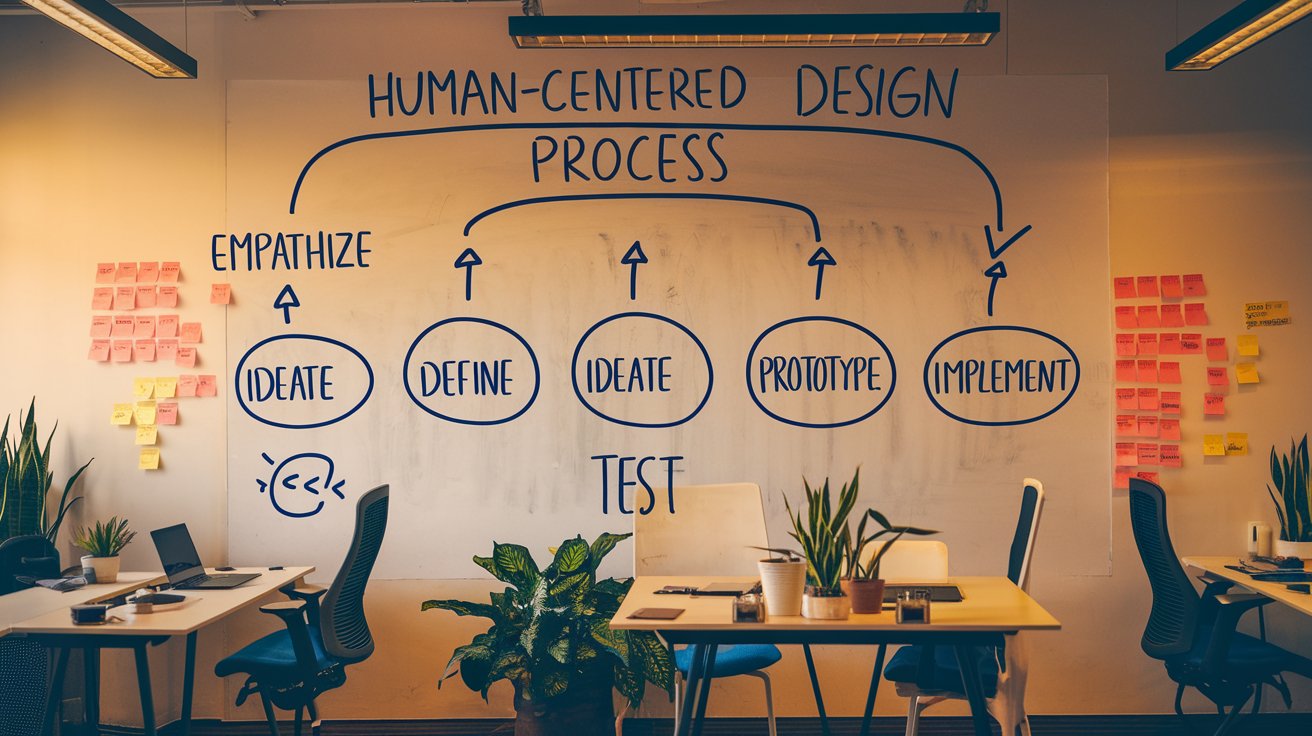
While frameworks vary, the five core steps of human-centered design typically include: (1) Empathize through research and observation to understand user needs, (2) Define the problem based on insights gathered, (3) Ideate by generating diverse solution concepts, (4) Prototype solutions rapidly to make ideas tangible, and (5) Test prototypes with real users and iterate based on feedback. Some organizations expand this to seven steps by separating observation from engagement and adding implementation as a distinct phase. Regardless of the specific number, the essential elements remain deep user understanding, collaborative ideation, rapid experimentation, and continuous learning through iteration.
What are the 7 steps in the design process?
The comprehensive seven-step human-centered design process includes: (1) Observation and immersion in user contexts, (2) Engagement and empathy building through direct interaction, (3) Synthesis and problem definition from research insights, (4) Ideation and concept generation, (5) Prototyping and experimentation with solution ideas, (6) Testing and refinement through user feedback, and (7) Implementation and continuous improvement post-launch. This expanded framework provides greater clarity about distinct activities within each phase. Organizations in 2026 report that following all seven steps results in 71% higher user satisfaction compared to abbreviated processes, though the steps remain iterative rather than strictly sequential.
What are the 4 steps of human-centered design?
The simplified four-step human-centered design model typically includes: (1) Inspiration through research and user engagement, (2) Ideation through collaborative concept generation, (3) Implementation through prototyping and testing, and (4) Iteration through continuous refinement based on feedback. This condensed framework, popularized by IDEO and others, makes HCD more accessible to organizations new to the methodology. While briefer than five or seven-step models, it maintains the essential elements of user research, creative problem-solving, rapid experimentation, and learning through iteration. The four-step approach works well for smaller projects or organizations building initial design capabilities before adopting more detailed frameworks.
How long does the human-centered design process typically take?
The duration of a human-centered design process varies significantly based on project scope, complexity, and organizational constraints. Small-scale projects might complete the full cycle in 6-8 weeks, while complex initiatives involving multiple user segments and systemic challenges can extend 6-12 months or longer. In 2026, US organizations report average project timelines of 12-16 weeks for product features and 4-6 months for entirely new offerings. Critical factors affecting timeline include research participant recruitment, number of iteration cycles, organizational decision-making speed, and resource availability. The key is allocating adequate time for each phase rather than rushing through steps, as compressed timelines typically result in solutions requiring extensive post-launch revisions that ultimately consume more time than proper initial research would have required.
Can small organizations with limited budgets use human-centered design?
Absolutely. While large organizations may have dedicated HCD teams and substantial research budgets, the human-centered design process scales to organizations of any size. Small businesses and nonprofits can apply core principles through guerrilla research methods, remote testing tools, lightweight prototyping with readily available materials, and creative participant recruitment. The essential requirement isn’t budget but commitment to understanding and prioritizing human needs throughout the design process. In 2026, numerous free and low-cost tools support HCD activities, from video conferencing for remote interviews to digital prototyping platforms and online usability testing services. Small organizations often have advantages in agility and direct access to customers, enabling faster iteration cycles. Research shows that organizations with budgets under $50,000 successfully implement human-centered approaches by focusing efforts strategically and leveraging available resources creatively.
What skills do teams need to implement human-centered design effectively?
Effective human-centered design requires a blend of technical, interpersonal, and creative skills. Core competencies include qualitative research methods (interviewing, observation, ethnography), facilitation and workshop design, visual communication and sketching, prototyping across different media, usability testing, and synthesis of complex information. Equally important are mindset qualities like empathy, curiosity, comfort with ambiguity, collaborative spirit, and willingness to have assumptions challenged. In 2026, successful HCD teams typically include researchers skilled in human behavior, designers with prototyping expertise, facilitators who can guide collaborative sessions, and subject matter experts providing domain knowledge. Organizations don’t need every team member to possess all skills; diverse teams where members contribute complementary capabilities often outperform groups of design generalists. Training programs, online courses, and communities of practice help teams develop HCD capabilities progressively over time.
| Process Step | Key Activities | Primary Outcome |
|---|---|---|
| Observation & Immersion | Ethnographic research, contextual inquiry, shadowing users in natural environments | Deep contextual understanding of user behaviors and environments |
| Engagement & Empathy | In-depth interviews, empathy mapping, journey mapping, persona development | Emotional connection with user experiences and challenges |
| Synthesis & Definition | Pattern identification, affinity diagramming, insight generation, problem framing | Clear, human-centered problem statement guiding design work |
| Ideation & Generation | Brainstorming, sketching, concept development, creative workshops | Diverse solution concepts addressing defined problems |
| Prototyping & Experimentation | Rapid prototyping, storyboarding, role-playing, mockup creation | Tangible representations enabling user interaction and feedback |
| Testing & Refinement | Usability testing, A/B comparisons, pilot programs, feedback analysis | Validated solutions refined through multiple iteration cycles |
| Implementation & Improvement | Launch planning, metrics establishment, continuous monitoring, ongoing refinement | Deployed solutions with mechanisms for continuous learning |