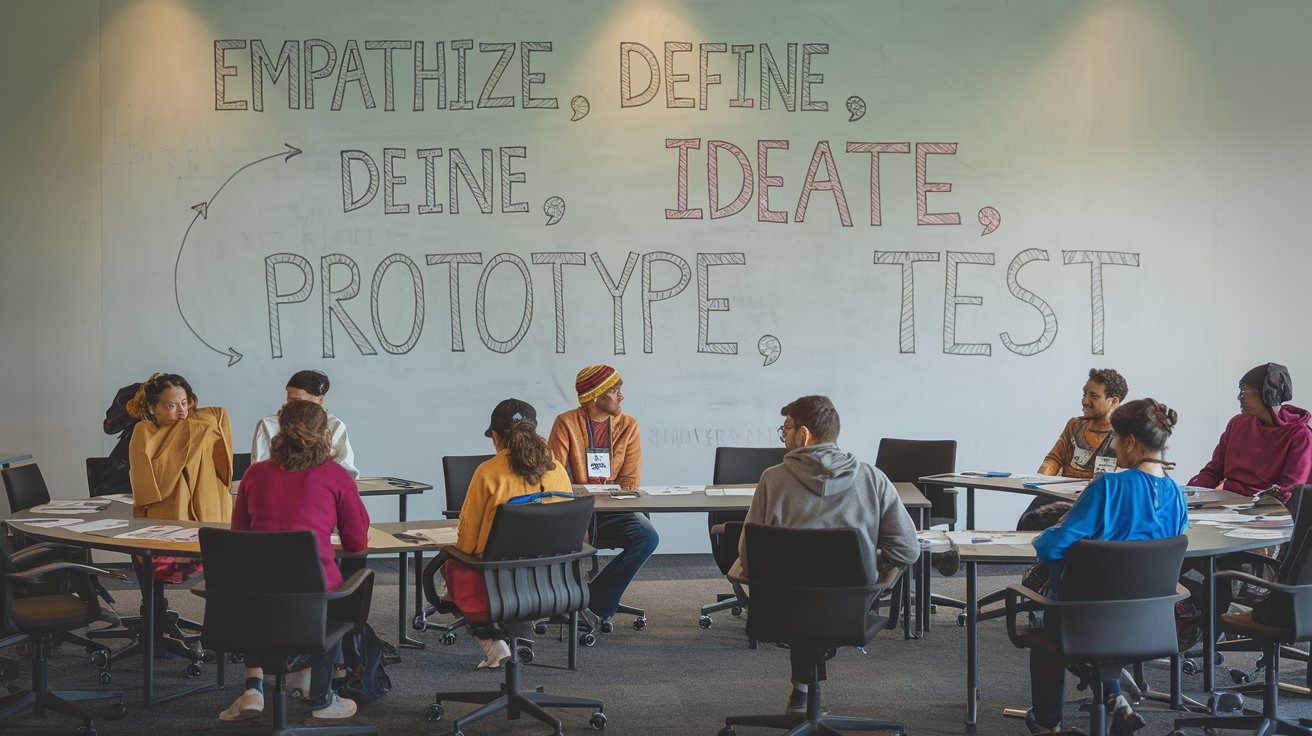
A design thinking workshop template provides facilitators with a structured framework to guide teams through human-centered problem-solving sessions. This comprehensive guide delivers ready-to-use templates, agendas, and activities that help organizations across the United States run effective design thinking workshops in 2026. Whether you need a PPT presentation, PDF handouts, or digital collaboration tools, these templates streamline the facilitation process while ensuring participants engage meaningfully with each stage of the design thinking methodology.
What Is a Design Thinking Workshop
A design thinking workshop is a facilitated collaborative session where cross-functional teams apply the five-stage design thinking methodology to solve complex problems. These workshops typically run between four hours and three full days, bringing together diverse perspectives to empathize with users, define problems, ideate solutions, prototype concepts, and test ideas. In 2026, approximately 78% of Fortune 500 companies in the United States incorporate design thinking workshops into their innovation processes, according to the Design Management Institute.
The workshop format accelerates the innovation cycle by compressing weeks of traditional development into intensive collaborative sessions. Participants engage in hands-on activities that move beyond theoretical discussion to tangible prototypes and actionable insights. A well-structured design thinking workshop template ensures facilitators guide teams through each phase systematically, maintaining energy and focus while producing meaningful outcomes that address real user needs.
Essential Components of a Design Thinking Workshop Template
An effective design thinking workshop template contains several critical components that structure the facilitation experience and participant journey. These elements work together to create a cohesive workshop experience that delivers results.
Workshop Agenda and Timeline
The design thinking workshop agenda breaks down each phase into timed segments with clear objectives and deliverables. A standard one-day workshop allocates 45 minutes for empathy activities, 30 minutes for problem definition, 90 minutes for ideation, 120 minutes for prototyping, and 45 minutes for testing and feedback. The template should include buffer time between activities, scheduled breaks every 90 minutes, and flexibility to extend high-energy ideation sessions. In 2026, hybrid workshops require additional time allocations for technology transitions and virtual participant engagement.
Successful design thinking workshop templates include detailed minute-by-minute timelines that keep facilitators on track while remaining adaptable to group dynamics. The agenda should specify which materials are needed for each activity, designated facilitator roles, and transition cues between workshop phases. Templates with visual timeline representations help participants understand the workshop journey and maintain momentum throughout the session.
Participant Roles and Responsibilities
Clear role definitions ensure smooth design thinking workshop execution and productive collaboration. The template should outline responsibilities for the lead facilitator who guides the overall process, co-facilitators who support breakout groups, documenters who capture insights and decisions, timekeeper who manages the agenda, and participants who actively engage in all activities. Many organizations in the United States designate a decision-maker who can commit resources to promising ideas that emerge during the workshop.
A comprehensive design thinking workshop template includes role cards or placards that participants can display at their workstations. These visual reminders help team members stay accountable to their assigned functions while contributing their unique expertise. The template should also specify ideal team composition, typically recommending 6-12 participants with diverse backgrounds including end users, technical experts, business stakeholders, and creative professionals.
Required Materials and Resources
The materials checklist within a design thinking workshop template ensures facilitators have everything needed for hands-on activities. Essential supplies include large sticky notes in multiple colors, thick markers, poster-sized paper or whiteboards, prototyping materials like cardboard and craft supplies, user research artifacts, timer or countdown clock, and camera for documentation. Digital workshops require collaborative platforms like Mural, Miro, or Figma with prepared boards for each activity.
Templates should specify quantities based on participant count and include vendor recommendations for procurement. A workshop supporting 12 participants typically requires 2,400 sticky notes, 24 markers, 8 poster boards, and comprehensive prototyping kits with at least 15 different material types. The design thinking workshop template free download options available in 2026 often include Amazon shopping lists with direct links to recommended supplies, streamlining the preparation process for first-time facilitators.
Step-by-Step Design Thinking Workshop Template Structure
A complete design thinking workshop template organizes activities sequentially through the five core phases of the design thinking methodology. Each phase builds upon insights from the previous stage, creating a logical progression toward innovative solutions.
Empathize Phase Activities
The empathize phase in your design thinking workshop template should include structured activities for understanding user perspectives and experiences. Start with a user interview activity where participants pair up to practice active listening techniques, spending 15 minutes interviewing each other about their experiences with the problem area. Follow with empathy mapping exercises where teams create visual representations of what users say, think, do, and feel. Include observation activities if possible, such as watching video recordings of users interacting with current solutions.
Template materials for the empathize phase should include interview question guides, empathy map canvases, observation worksheets, and persona development frameworks. The design thinking workshop activities during this phase generate raw data that becomes the foundation for problem definition. Facilitators should emphasize suspending judgment, encouraging curiosity, and documenting specific quotes and behaviors rather than generalizations. In 2026, many templates incorporate digital ethnography methods that allow participants to review social media conversations and online community discussions relevant to their challenge.
Define Phase Framework
The define phase transforms empathy research into actionable problem statements using structured frameworks within the design thinking workshop template. Teams synthesize their observations by clustering sticky notes with similar themes, identifying patterns and contradictions in user behavior, and articulating the core needs behind stated desires. The Point of View (POV) statement activity guides participants in creating human-centered problem definitions using the format: [User] needs [need] because [insight].
Effective design thinking workshop templates provide multiple problem framing exercises to ensure teams focus on the right challenge. Include How Might We question generation where each POV statement converts into optimistic opportunity questions. The template should allocate time for dot voting to prioritize which problem statements offer the greatest potential impact. This phase typically produces 3-5 refined problem statements that become the focus for ideation activities, ensuring the workshop maintains clear direction while avoiding scope creep.
Ideate Phase Techniques
The ideation section of your design thinking workshop template should include diverse brainstorming techniques that generate quantity and variety of solutions. Begin with classic brainstorming where participants rapidly generate ideas for 10 minutes, aiming for 50-100 ideas per group without critique or discussion. Follow with structured techniques like SCAMPER (Substitute, Combine, Adapt, Modify, Put to another use, Eliminate, Reverse) that systematically explore solution variations. Include bodystorming activities where participants physically act out solutions to kinesthetic problems.
A comprehensive design thinking workshop template PPT presentation guides facilitators through ideation rules displayed prominently: defer judgment, encourage wild ideas, build on others’ ideas, stay focused on topic, one conversation at a time, and visualize concepts. Template materials should include idea capture sheets, voting dots for prioritization, and concept development canvases that help teams elaborate their most promising ideas. Research from IDEO shows that workshops generating over 100 ideas produce solutions with 3.4 times higher user satisfaction ratings than those generating fewer than 50 ideas.
Prototype Phase Guidelines
The prototype phase in your design thinking workshop template emphasizes rapid, low-fidelity representations that make ideas tangible for testing. Templates should specify that prototypes need only be detailed enough to test specific assumptions, not polished enough for production. Activity instructions guide teams to spend 60-90 minutes building physical models, creating storyboards, developing role-play scenarios, or designing paper interfaces that simulate their solution concepts.
Effective design thinking workshop templates include prototype planning worksheets that help teams identify their riskiest assumptions and determine what type of prototype best tests those assumptions. Provide examples of different prototype types: physical models for product concepts, service blueprints for experience designs, clickable wireframes for digital solutions, and video scenarios for complex interactions. The template should emphasize that prototype quality matters less than speed and learning value, encouraging teams to embrace imperfection as a tool for rapid iteration.
Test Phase Structure
The testing phase within a design thinking workshop template creates structured feedback loops where teams present prototypes to users and stakeholders for validation. The template should include testing protocols that specify how teams introduce their prototype without biasing feedback, observe user interactions without intervening, ask open-ended follow-up questions, and document both verbal responses and behavioral reactions. Allocate 5-7 minutes per prototype presentation with an additional 8-10 minutes for structured feedback.
Template materials for testing should include feedback capture forms, observation checklists, and iteration planning worksheets. Guide facilitators to organize gallery walks where participants rotate through multiple prototype stations, experiencing different solutions and providing written feedback. The design thinking workshop template PDF should conclude with a synthesis activity where teams review all feedback, identify patterns in user responses, and develop action plans for next iteration steps. In 2026, many templates incorporate rapid user testing via video calls, bringing external perspectives directly into the workshop without requiring physical presence.
Design Thinking Workshop Template Formats and Downloads
Professional facilitators utilize various design thinking workshop template formats depending on their delivery method, organizational requirements, and participant preferences. Each format serves specific use cases and offers distinct advantages.
PowerPoint and Google Slides Templates
A design thinking workshop template PPT provides the primary presentation framework that guides participants through each workshop phase. These templates typically contain 60-120 slides including title slides for each phase, activity instruction slides with visual examples, timer slides for time-boxed exercises, and transition slides that signal movement between activities. The best PowerPoint templates use consistent visual design, large readable fonts suitable for projection, and minimal text that keeps attention on the facilitator and activities rather than slides.
Premium design thinking workshop template PPT downloads available in 2026 include embedded timers, animation sequences that reveal instructions progressively, and editable icon libraries that allow customization for specific industries. Google Slides versions offer real-time collaboration benefits for co-facilitators and include presenter notes with detailed facilitation tips for each slide. Look for templates with master slide layouts that maintain brand consistency while allowing content customization, and ensure compatibility with both Windows and Mac presentation systems commonly used in United States corporate environments.
PDF Workshop Guides and Handouts
The design thinking workshop template PDF format serves as comprehensive facilitation guides and participant handouts that support the presentation materials. Facilitator guides typically run 25-40 pages and include detailed activity instructions, suggested language for introducing exercises, troubleshooting tips for common challenges, and alternative activities for different group sizes or time constraints. Participant workbooks contain activity worksheets, reference materials, and documentation templates that individuals complete throughout the workshop.
High-quality PDF templates feature professional layout design with clear visual hierarchy, printable worksheets sized for standard US letter paper, and version-controlled footers that help facilitators identify their most current materials. The design thinking workshop template PDF should include a comprehensive materials list, pre-workshop preparation checklist, and post-workshop follow-up recommendations. Many organizations print these guides in color for premium workshops or utilize black-and-white versions for larger-scale deployments, so templates should remain readable and functional in both formats.
Digital Collaboration Board Templates
Digital design thinking workshop templates for platforms like Mural, Miro, and FigJam have become essential for hybrid and remote workshops in 2026. These templates contain pre-configured frames for each workshop activity, digital sticky note areas, voting mechanisms, timer integrations, and collaborative spaces where multiple participants work simultaneously. Quality digital templates include visual instructions embedded directly in the board, example content that demonstrates expected outputs, and clearly labeled sections that prevent participant confusion in virtual environments.
The most effective digital design thinking workshop template free options provide duplicatable frames that allow multiple breakout groups to work on identical activities in parallel sections of the infinite canvas. Templates should include built-in icebreaker activities optimized for virtual engagement, such as collaborative drawing exercises or rapid-fire question responses that build energy in remote settings. Look for templates that integrate video conferencing tools, allow facilitators to control participant permissions for different activities, and export completed boards in formats suitable for post-workshop documentation and stakeholder reporting.
Customizing Your Design Thinking Workshop Template
While base design thinking workshop templates provide solid foundations, customization ensures the workshop addresses your specific organizational context, participant needs, and challenge complexity. Strategic modifications increase relevance and participant engagement.
Industry-Specific Adaptations
Adapting a design thinking workshop template for specific industries requires incorporating relevant terminology, case studies, and examples that resonate with participants. Healthcare workshops should include patient journey mapping activities and regulatory consideration discussions, while financial services templates might emphasize security and compliance constraints during ideation. Technology sector workshops benefit from rapid digital prototyping tools, whereas manufacturing contexts require physical product iteration frameworks.
Customize your design thinking workshop activities by researching industry-specific pain points and incorporating them into empathy exercises. Replace generic user personas with detailed representations of your actual customer segments, complete with demographic data, behavioral patterns, and need states specific to your market. In 2026, successful facilitators maintain libraries of industry-adapted templates that reduce preparation time while increasing workshop relevance for specialized audiences across the United States business landscape.
Time Duration Modifications
Standard design thinking workshop templates assume full-day or multi-day sessions, but many organizations require condensed formats that fit existing meeting schedules. A 90-minute sprint workshop focuses on a single phase with pre-completed empathy research, dedicating full time to rapid ideation and concept sketching. Half-day workshops (4 hours) combine empathize and define phases into accelerated activities, allocate extended time to ideation, and conclude with concept presentations rather than full prototypes.
When compressing your design thinking workshop template into shorter timeframes, prioritize activities with highest learning value and eliminate redundant exercises. A focused 2-hour workshop might include a 20-minute empathy activity using pre-gathered user insights, a 15-minute problem framing exercise, a 45-minute ideation session with two different techniques, a 30-minute concept development activity, and a 10-minute gallery walk for peer feedback. Extended multi-day workshops allow deeper exploration, with day one focused on empathy and definition, day two on ideation and prototyping, and day three on testing and refinement with real users.
Team Size Adjustments
Effective design thinking workshop templates scale activities appropriately for different participant counts while maintaining engagement and productivity. Small teams of 4-6 people work as a single group throughout the workshop, allowing for intimate discussion and rapid consensus but potentially limiting perspective diversity. Medium workshops with 8-15 participants benefit from breakout group activities where teams of 3-4 tackle different aspects of the challenge before reconvening to share insights and build on each other’s work.
Large-scale design thinking workshops with 20-50 participants require sophisticated facilitation structures with multiple co-facilitators managing parallel breakout rooms, synchronized timing systems that keep all groups aligned, and strategic reconvening moments where groups share progress and cross-pollinate ideas. The template should specify how many facilitators are needed per participant (typically one facilitator per 8-10 participants), how breakout groups form (random assignment vs. strategic composition), and how work synthesizes across groups. Virtual workshops particularly benefit from clear breakout room assignments and digital collaboration spaces that allow asynchronous contribution between synchronous sessions.
Pre-Workshop Preparation Using Templates
Successful design thinking workshops require thorough preparation that begins weeks before the actual session. A comprehensive template includes pre-workshop checklists and planning tools that ensure facilitators address all critical preparation elements.
Stakeholder Alignment Activities
The design thinking workshop template should include stakeholder alignment worksheets that help facilitators clarify workshop objectives, success metrics, and decision-making authority before participants gather. Schedule pre-workshop interviews with key stakeholders to understand their perspectives on the challenge, desired outcomes, resource constraints, and implementation considerations. Document these insights in a stakeholder map that identifies who needs to sponsor the workshop, who should participate, who requires updates, and who will champion resulting ideas.
Create a workshop charter document using template sections that specify the design challenge in detail, define what’s in scope and out of scope, establish how decisions will be made about ideas generated, and clarify what resources are available for prototype development. Share this charter with all participants at least one week before the design thinking workshop, allowing them to prepare relevant insights, gather supporting materials, and arrive with appropriate expectations. In 2026, organizations running effective workshops report 67% higher implementation rates when stakeholder alignment occurs before the session rather than during it.
User Research Compilation
A robust design thinking workshop template includes frameworks for organizing existing user research that participants will reference throughout the session. Compile customer interview transcripts, survey results, usage analytics, support ticket themes, and competitive analysis into accessible formats that teams can quickly review during empathy activities. Create research summary posters that highlight key user quotes, behavioral patterns, and unmet needs that will inspire ideation.
When existing research is limited, the template should guide pre-workshop user interviews or observation sessions that generate fresh insights. Include interview protocols with open-ended questions, observation worksheets that capture contextual details, and synthesis frameworks that identify patterns across multiple users. Package this research into participant-ready materials such as user journey maps, persona cards, or highlight reels that bring user voices directly into the design thinking workshop. Organizations that ground workshops in specific user data generate solutions with 2.8 times higher adoption rates than those relying on assumptions or general market knowledge.
Space and Materials Setup
The physical or virtual environment significantly impacts design thinking workshop energy and productivity, so templates should include detailed setup checklists. For in-person workshops, arrange furniture to support collaboration with tables for 4-6 people, clear wall space for posting work, and an open area for physical activities. Test all technology including projectors, video conferencing equipment for hybrid participants, and music systems for energizing transitions. Organize materials into activity-specific kits that facilitators distribute at appropriate times rather than overwhelming participants with supplies.
Virtual workshop setup using your design thinking workshop template requires technical preparation including testing digital collaboration platforms, creating breakout room assignments, preparing shared folders with resource documents, and developing a technical support plan for participants experiencing connectivity issues. Send participants a technology checklist three days before the workshop specifying required software, recommended hardware like headphones and webcams, and a 15-minute pre-session technology test meeting. Create visual backgrounds or virtual room designs that establish creative energy and clearly designate different activity spaces within the digital environment.
Facilitating the Workshop Using Your Template
The design thinking workshop template serves as your facilitation roadmap, but effective delivery requires adapting to group dynamics while maintaining structure. Skilled facilitators balance template adherence with responsive adjustments.
Energy Management Techniques
Your design thinking workshop template should include energy management strategies that sustain participant engagement throughout intensive sessions. Begin with high-energy icebreakers that establish psychological safety and creative mindsets, such as collaborative drawing exercises or rapid personal story sharing. Alternate between divergent activities that expand possibilities and convergent exercises that focus direction, preventing both overwhelm and premature closure on ideas.
Incorporate movement breaks every 75-90 minutes using template-provided energizer activities like group stretching, walking discussions, or playful challenges unrelated to the core work. Monitor participant energy levels by observing body language, contribution patterns, and focus quality, adjusting the template timeline when needed to extend engaging activities or accelerate lagging sections. The most effective design thinking workshop activities in 2026 incorporate neuroscience-based techniques like bilateral stimulation exercises, creative constraint challenges, and perspective-shifting games that renew cognitive resources during demanding innovation work.
Managing Diverse Personalities
A comprehensive design thinking workshop template includes facilitation techniques for balancing different working styles and personality types. Create participation structures that accommodate both introverted and extroverted tendencies by alternating between individual reflection time and group discussion. Use silent brainstorming techniques where participants write ideas independently before sharing verbally, ensuring quieter voices contribute fully without being overshadowed by dominant personalities.
Template materials should include role rotation mechanisms that prevent single individuals from controlling group direction while ensuring everyone experiences different contribution modes. Address skeptical participants by acknowledging their concerns, creating space for critical evaluation during appropriate phases, and demonstrating how constructive skepticism improves rather than derails innovation. When tensions arise between participants, reference the ground rules established during workshop opening and refocus energy on user needs rather than personal preferences. Effective facilitation of design thinking workshops creates environments where analytical and creative thinkers, detail-oriented and big-picture participants, and risk-taking and cautious personalities all contribute their strengths.
Documentation and Capture Methods
Systematic documentation throughout your design thinking workshop preserves insights and enables post-workshop action, so templates should specify capture responsibilities and methods. Assign dedicated documenters who photograph all sticky note collections, poster creations, and prototype artifacts throughout the session. Use digital documentation tools like Otter.ai or similar transcription services to capture key discussion points during debriefs and presentations without manual note-taking that distracts from facilitation.
The design thinking workshop template should include standardized documentation forms for each phase: empathy insight sheets that record user quotes and observations, problem statement logs that track how challenges evolved, idea capture spreadsheets that preserve all concepts generated, prototype description templates that explain solution concepts, and testing feedback forms that organize user responses. Create a documentation schedule that specifies when photos should be taken, which worksheets get collected, and how digital board states get saved. Within 24 hours of the workshop, compile all documentation into a summary report using the template-provided format that stakeholders can review and reference during implementation planning.
Post-Workshop Implementation Templates
The design thinking workshop template should extend beyond the session itself to support implementation of generated ideas. Post-workshop templates maintain momentum and translate creative concepts into operational reality.
Idea Prioritization Frameworks
Include prioritization matrices within your design thinking workshop template that help teams objectively evaluate which ideas warrant further development. The impact-feasibility matrix plots concepts based on potential user value against implementation difficulty, identifying quick wins and strategic bets that deserve resource allocation. Provide scoring rubrics that assess ideas across multiple dimensions including user desirability, technical feasibility, business viability, and strategic alignment with organizational priorities.
Template materials should guide post-workshop prioritization sessions where expanded stakeholder groups beyond original participants evaluate concepts using consistent criteria. Include decision documentation forms that capture why certain ideas advance while others pause, creating transparent rationale that builds organizational trust in the design thinking workshop process. In 2026, leading organizations report that structured prioritization frameworks increase idea implementation rates from approximately 12% to 34%, demonstrating the value of systematic evaluation beyond initial workshop enthusiasm.
Prototype Development Roadmaps
The design thinking workshop template should include roadmap frameworks that transform rough workshop prototypes into tested solutions ready for broader deployment. Create project plans that specify next iteration cycles, identify required resources and expertise, establish testing protocols with real users, and define success metrics that determine whether concepts should scale. Break development into sprints with clear deliverables, timeline estimates, and decision points where teams evaluate whether to pivot, persevere, or pause.
Template materials for prototype development should include user testing scripts that validate assumptions with larger user samples, feedback synthesis worksheets that identify patterns across multiple testing sessions, and iteration planning canvases that guide refinement decisions based on evidence rather than opinions. Specify milestone reviews where development teams present progress to stakeholders, demonstrate learnings from user testing, and request resources for continued development. Organizations using structured roadmap templates report 2.3 times faster movement from design thinking workshop concept to market-ready solution compared to those with informal follow-through processes.
Common Design Thinking Workshop Template Mistakes
Understanding typical pitfalls in design thinking workshop execution helps facilitators avoid common errors that reduce session effectiveness and implementation success.
Overloading the Agenda
First-time facilitators frequently pack their design thinking workshop template with excessive activities, attempting to demonstrate every possible technique rather than focusing on essential exercises that drive outcomes. Overloaded agendas rush participants through important reflection moments, eliminate processing time needed for insight development, and create exhaustion that diminishes creative output. The result is superficial engagement with each phase rather than deep exploration that generates breakthrough thinking.
Effective templates prioritize quality over quantity, selecting 2-3 high-impact activities per phase rather than attempting comprehensive coverage of every possible exercise. Build buffer time into the agenda that allows extending valuable discussions, accommodating unexpected insights that deserve exploration, and providing mental recovery between intense activities. A realistic design thinking workshop template recognizes that meaningful innovation requires depth of engagement, not breadth of activity completion. Facilitators who resist the temptation to overstuff agendas report higher participant satisfaction scores and stronger post-workshop implementation results.
Skipping User Research
Many organizations attempt to run design thinking workshops without investing in preliminary user research, relying instead on participant assumptions about user needs and preferences. This fundamental error undermines the entire methodology, which grounds innovation in deep empathy and actual user insights rather than internal opinions. Workshops without research foundation generate ideas that reflect organizational preferences rather than solving real user problems, leading to low adoption rates and wasted development resources.
Quality design thinking workshop templates make user research integration non-negotiable by including empathy activities that only function with actual user data. Even limited research with 5-8 users provides valuable grounding that transforms workshop outcomes. When time constraints prevent extensive pre-workshop research, the template should include rapid ethnography techniques where participants conduct brief user interviews during the session itself, observe real users in context, or review existing customer feedback systematically. Organizations that ground workshops in user reality report 4.1 times higher solution adoption rates than those operating from assumption-based ideation.
Neglecting Follow-Through Planning
The most common failure point in design thinking workshops occurs after the session ends, when ideas languish without clear ownership, resources, or implementation plans. Facilitators who invest heavily in the workshop experience but minimally in follow-through structures create participant cynicism about innovation processes and reduce willingness to engage in future creative initiatives. Ideas without implementation pathways waste the organizational investment in the workshop itself.
Comprehensive design thinking workshop templates dedicate the final 30-45 minutes to concrete action planning where teams identify next steps, assign responsibilities, establish timelines, and schedule follow-up meetings. Include templates for executive summaries that communicate workshop outcomes to leadership, resource request forms that secure budget and staffing for prototype development, and project charters that formalize idea development teams. Build 30-day, 60-day, and 90-day check-in meetings into the workshop closing, creating accountability structures that maintain momentum beyond initial enthusiasm. Organizations with systematic follow-through processes implement ideas from 34% of workshops compared to just 8% implementation rates among those without structured next-step planning.
Related video about design thinking workshop template
This video complements the article information with a practical visual demonstration.
Frequently Asked Questions
What should be included in a design thinking workshop template?
A comprehensive design thinking workshop template should include a detailed agenda with time allocations for each phase, participant role descriptions, complete materials checklists specifying supplies and quantities, activity instructions with facilitation tips for empathize, define, ideate, prototype, and test phases, documentation forms for capturing insights, and post-workshop follow-up frameworks. The template should provide both facilitator guides with detailed instructions and participant handouts with worksheets and reference materials. Quality templates also include customization guidance for different industries, time durations, and team sizes.
How long should a design thinking workshop be?
Standard design thinking workshops range from 90 minutes to three full days depending on challenge complexity and depth of exploration desired. A focused 2-hour sprint workshop addresses a narrow problem with pre-completed research, while half-day sessions (4 hours) allow abbreviated coverage of all five phases. Full-day workshops (6-8 hours) provide time for thorough empathy, robust ideation, and basic prototyping. Multi-day formats enable deep user research, extensive ideation with 100+ concepts, high-fidelity prototyping, and real user testing. Most organizations in the United States find one to two full days optimal for balancing schedule constraints with meaningful innovation work.
Can I run a design thinking workshop virtually?
Virtual design thinking workshops work effectively using digital collaboration platforms like Mural, Miro, or FigJam combined with video conferencing tools. Digital templates require adaptations including shorter activity durations (reduce by 20-30% compared to in-person), more frequent breaks to address screen fatigue, explicit participation structures that ensure remote voices contribute equally, and asynchronous work options that accommodate different time zones. Virtual workshops benefit from pre-populated digital boards with clear instructions, breakout room activities for small group work, and integrated voting mechanisms for prioritization. Success rates for virtual workshops in 2026 match in-person sessions when facilitators use purpose-built digital templates and maintain high energy facilitation.
Where can I download free design thinking workshop templates?
Free design thinking workshop templates are available from multiple reputable sources in 2026. The LUMA Institute offers downloadable activity templates and facilitation guides. Stanford d.school provides comprehensive workshop resources including agendas and worksheets. IDEO Design Kit includes free templates for each design thinking phase. Miro and Mural maintain community template galleries with dozens of user-contributed workshop boards. Nielsen Norman Group publishes research-backed templates for UX-focused design workshops. Government innovation labs including 18F and USDS share public domain workshop materials. While free templates provide solid foundations, premium paid versions often include more detailed facilitation guidance, industry-specific customizations, and professional graphic design.
What is the ideal team size for a design thinking workshop?
The optimal design thinking workshop team size ranges from 6 to 12 participants, balancing diverse perspectives with manageable group dynamics. Teams smaller than 6 risk limited viewpoint diversity and insufficient energy for robust ideation, while groups larger than 15 require breakout structures that increase facilitation complexity. The ideal composition includes end users who experience the problem directly, subject matter experts with technical knowledge, business stakeholders who understand organizational constraints, and creative thinkers who challenge conventional approaches. For large-scale workshops exceeding 20 participants, organize multiple parallel teams working on different aspects of the challenge with periodic reconvening sessions to share insights and cross-pollinate ideas across groups.
How do I customize a design thinking workshop template for my industry?
Customize your design thinking workshop template by replacing generic examples with industry-specific case studies, incorporating relevant regulatory constraints into ideation guidelines, adapting user personas to reflect your actual customer segments with specific demographic and behavioral data, and modifying prototyping activities to match your solution types whether physical products, digital experiences, or service interactions. Healthcare templates should emphasize patient safety and HIPAA compliance, financial services versions include security and regulatory considerations, technology workshops integrate rapid digital prototyping tools, and manufacturing templates focus on physical product iteration. Include industry terminology in activity instructions, reference familiar competitors during empathy exercises, and ensure success metrics align with sector-specific performance indicators relevant to your United States market context.
| Template Component | Key Elements | Primary Benefit |
|---|---|---|
| Workshop Agenda | Phase timing, activity sequence, break schedule, buffer time allocations | Maintains structure while allowing flexibility for group dynamics |
| Activity Instructions | Step-by-step guides, facilitation tips, example outputs, time limits | Enables consistent delivery across different facilitators |
| Materials Checklist | Supply quantities, vendor recommendations, setup instructions | Ensures all necessary resources available for hands-on activities |
| Documentation Forms | Insight capture sheets, photo logs, synthesis worksheets | Preserves workshop outputs for post-session implementation |
| Follow-Up Framework | Prioritization matrices, action plans, milestone reviews | Translates creative concepts into operational reality with accountability |