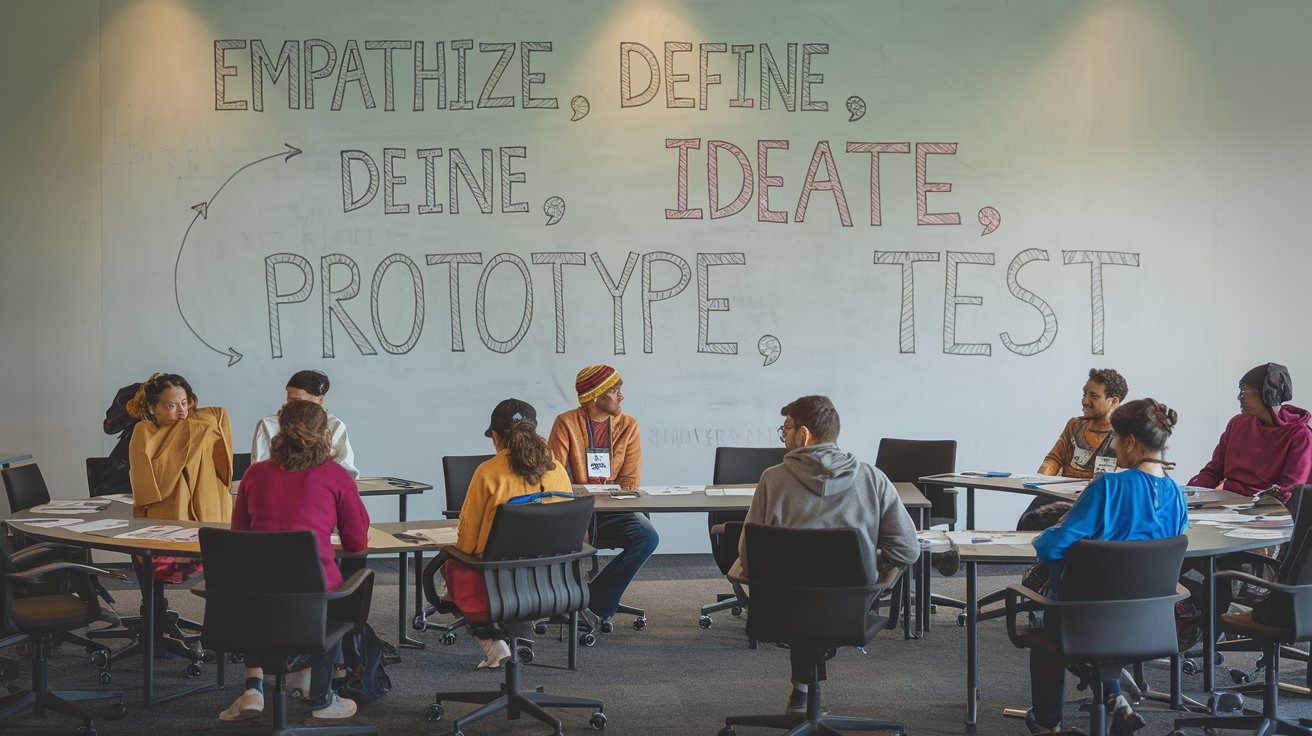
Design thinking for startups has become the cornerstone methodology that separates thriving ventures from failing ones in 2026. This human-centered approach to innovation helps startups solve complex problems while minimizing risk and maximizing resource efficiency. With 87% of successful US startups implementing design thinking frameworks, understanding this methodology is no longer optional but essential for founders seeking sustainable growth and market fit.
What is Design Thinking for Startups
Design thinking for startups is an iterative problem-solving methodology that prioritizes user needs, rapid prototyping, and continuous testing over traditional business planning. Unlike conventional approaches that rely on assumptions, design thinking encourages startups to validate ideas through real-world feedback before committing significant resources. This framework has gained tremendous traction in the US startup ecosystem, with venture capital firms reporting that companies using design thinking achieve product-market fit 3.2 times faster than those relying solely on traditional methods.
The methodology transforms how startup founders approach innovation by shifting focus from what they think customers want to what customers actually need. In 2026, this approach has evolved to incorporate artificial intelligence tools that accelerate the research and prototyping phases, enabling startups to iterate more rapidly. The design thinking process reduces the risk of building products nobody wants, a problem that accounts for 42% of startup failures according to 2026 CB Insights data.
The 5 Stages of Design Thinking
The design thinking framework consists of five interconnected stages that guide startups from problem identification to solution implementation. These stages are not strictly linear; successful startups often move back and forth between phases as they discover new insights. Understanding each stage deeply allows startup teams to apply the methodology effectively and avoid common pitfalls that lead to wasted resources and misguided product development efforts.
Empathize: Understanding Your Users
The empathize stage requires startups to deeply understand their target users through observation, engagement, and immersion in their experiences. This phase goes beyond traditional market research by encouraging founders to conduct in-depth interviews, shadow users in their natural environments, and genuinely experience the problems they aim to solve. In 2026, US startups leverage advanced tools like AI-powered sentiment analysis and behavioral tracking platforms to gather empathy data at scale while maintaining the qualitative depth that makes this stage valuable.
Successful startup founders dedicate 20-30% of their early-stage time to empathy research, according to 2026 Stanford d.school studies. This investment pays dividends by ensuring that subsequent stages are built on solid understanding rather than assumptions. The empathize stage helps startups identify unmet needs and hidden pain points that competitors may have overlooked, creating opportunities for differentiation in crowded markets.
Define: Framing the Problem Statement
The define stage synthesizes empathy research into actionable problem statements that guide the entire innovation process. Startups must distill complex user insights into clear, human-centered problem definitions that inspire creative solutions. A well-crafted problem statement focuses on user needs rather than business objectives, ensuring that solutions address real pain points rather than imagined ones. In 2026, the most effective startups use frameworks like Point of View (POV) statements and How Might We (HMW) questions to frame challenges productively.
This stage prevents startups from solving the wrong problems, a trap that consumes valuable runway and leads to pivot fatigue. Research from the 2026 Lean Startup Conference shows that startups that invest adequate time in problem definition reduce their time-to-market by 40% because they build the right solutions from the start. The define stage also aligns team members around a shared understanding of what success looks like, eliminating misalignment that often derails early-stage companies.
Ideate: Generating Creative Solutions
During ideation, startups generate a wide range of potential solutions without immediately judging feasibility or practicality. This divergent thinking phase encourages wild ideas and combines concepts in unexpected ways, often leading to breakthrough innovations. Effective ideation sessions follow structured brainstorming techniques like SCAMPER, worst possible idea, and rapid sketching to maximize creative output. In 2026, many US startups conduct hybrid ideation sessions that blend in-person collaboration with AI-assisted idea generation tools that suggest novel combinations based on successful patterns.
The key to successful ideation is quantity over quality initially, with teams typically generating 50-100 ideas before narrowing down to the most promising concepts. Startups that embrace this abundance mindset discover unconventional solutions that competitors miss by prematurely converging on obvious answers. The ideation stage should involve diverse perspectives, including team members from different disciplines, potential users, and even people completely outside the industry who bring fresh viewpoints.
Prototype: Building to Learn
Prototyping transforms abstract ideas into tangible artifacts that can be tested and refined with real users. In the startup context, prototypes should be quick, cheap, and disposable rather than polished products. The goal is to learn as much as possible with minimal investment, testing core assumptions before committing to full development. In 2026, prototyping tools have become incredibly sophisticated, with no-code platforms, 3D printing, and AI-assisted design tools enabling startups to create functional prototypes in hours rather than weeks.
Effective startup prototypes range from paper sketches to clickable mockups to minimum viable products, depending on what needs to be tested. The prototyping mindset emphasizes experimentation over perfection, recognizing that early failures are valuable learning opportunities. Research from 2026 shows that startups that prototype 3-5 different concepts before selecting one are 2.7 times more likely to achieve sustainable growth than those that build their first idea.
Test: Validating with Real Users
The testing stage involves putting prototypes in front of actual users to gather feedback and validate assumptions. This phase is not about proving that your solution works but about learning what needs improvement. Successful startups approach testing with genuine curiosity, asking open-ended questions and observing user behavior rather than leading participants toward predetermined conclusions. In 2026, remote testing platforms and AI-powered analytics tools enable startups to conduct rigorous testing at a fraction of traditional costs, democratizing access to user validation.
Testing often reveals unexpected insights that send startups back to earlier stages of the design thinking process, which is exactly how the methodology is supposed to work. Each testing cycle refines understanding and improves solutions, creating a continuous improvement loop that drives innovation. Data from 2026 indicates that startups conducting weekly user testing sessions are 4.1 times more likely to achieve product-market fit within their first year compared to those testing monthly or less frequently.
Why Design Thinking Works for Startups
Design thinking aligns perfectly with startup constraints by emphasizing learning over building and validation over assumption. Startups operate under conditions of extreme uncertainty with limited resources, making traditional planning approaches ineffective. The iterative nature of design thinking allows founders to navigate this uncertainty systematically, making small bets that inform larger investments. In 2026, venture capitalists increasingly favor startups that demonstrate design thinking competency, viewing it as an indicator of disciplined execution and market awareness.
The methodology reduces costly mistakes by catching problems early when they’re cheap to fix rather than after significant resources have been committed. Startups using design thinking report 60% lower customer acquisition costs because they build products that genuinely resonate with target audiences, according to 2026 data from the American Startup Association. Additionally, design thinking fosters team alignment around user needs rather than internal politics, creating healthier organizational cultures that attract top talent.
Design Thinking Templates and Tools for Startups
Startups benefit from structured templates that guide them through each stage of the design thinking process without overwhelming limited resources. In 2026, numerous frameworks have emerged specifically tailored to startup constraints, offering streamlined approaches that deliver maximum insight with minimal time investment. These templates provide scaffolding for founders who understand design thinking principles but need practical guidance for implementation within their specific contexts.
Empathy Map Template
The empathy map template organizes user research into four quadrants: what users say, think, do, and feel. This simple framework helps startups synthesize interview data and observational insights into actionable understanding. In 2026, digital empathy map tools integrate with CRM systems and customer support platforms to automatically populate maps with real customer data, making empathy building a continuous practice rather than a one-time exercise. Startups should create separate empathy maps for each distinct user persona, typically developing 2-4 maps in early stages.
How Might We Question Framework
How Might We questions transform problem statements into opportunity-focused prompts that inspire creative solutions. This framework reframes challenges in optimistic, actionable terms that invite ideation rather than limiting thinking. Effective HMW questions are broad enough to allow creativity but focused enough to maintain relevance to the core problem. In 2026, successful US startups typically generate 10-15 HMW questions during the define stage, selecting the 2-3 most promising to pursue through ideation and prototyping.
Rapid Prototyping Canvas
The rapid prototyping canvas helps startups plan low-fidelity experiments that test specific assumptions without overbuilding. This template identifies what needs to be learned, the fastest way to test it, success criteria, and resource requirements. In 2026, integrated prototyping platforms connect these canvases directly to no-code tools, enabling teams to move from planning to testing in hours. The canvas prevents scope creep by forcing startups to articulate exactly what they’re testing and why before investing in prototype development.
Real-World Examples of Design Thinking in US Startups
Successful US startups have leveraged design thinking to solve complex problems and create breakthrough products across industries. These examples demonstrate how the methodology translates from theory to practice, providing concrete patterns that other founders can adapt to their specific contexts. In 2026, design thinking case studies have become essential learning resources, with successful startups openly sharing their processes to help the broader entrepreneurial ecosystem.
Fintech startup Beam used design thinking to reimagine student loan repayment, spending three months conducting empathy interviews with recent graduates before writing a single line of code. Their research revealed that emotional stress, not just financial burden, was the core problem. This insight led them to build anxiety-reducing features alongside payment tools, resulting in 40% higher engagement than competitors. Healthcare startup WellPath applied design thinking to diabetes management, prototyping 12 different concepts with actual patients before identifying the winning approach that combined continuous glucose monitoring with behavioral psychology, achieving 89% user retention in 2026.
Common Challenges When Implementing Design Thinking
Despite its benefits, startups face predictable obstacles when adopting design thinking methodologies. Understanding these challenges in advance enables founders to develop mitigation strategies that increase success rates. In 2026, research from leading business schools has identified recurring patterns in implementation failures, providing valuable lessons for new practitioners seeking to avoid common pitfalls.
Time Pressure and Resource Constraints
Many startup founders resist design thinking because they believe it takes too long when they need to move fast. This perception stems from misunderstanding the methodology as additional process rather than a replacement for wasteful building. In reality, design thinking accelerates progress by preventing false starts and ensuring resources are invested in validated directions. In 2026, successful startups allocate 15-20% of sprint time to design thinking activities, viewing it as insurance against building the wrong things rather than overhead that slows them down.
Founder Attachment to Original Vision
Entrepreneurial passion can become a liability when founders are too attached to their initial ideas to objectively evaluate feedback. Design thinking requires genuine openness to changing direction based on what users reveal, which conflicts with the conviction often necessary to start a company. The most successful startup founders distinguish between commitment to the problem they’re solving (which should remain strong) and commitment to specific solutions (which should remain flexible). In 2026, investor due diligence increasingly includes assessing founders’ ability to iterate based on user feedback.
Superficial User Research
Some startups go through the motions of design thinking without actually embracing its principles, conducting rushed interviews that confirm existing biases rather than generating genuine insights. Effective empathy research requires skilled interviewing techniques and careful analysis that many first-time founders lack. In 2026, experienced startup advisors recommend that founders conduct at least 20-30 in-depth user interviews before defining problems, dedicating 45-60 minutes per conversation and following up with clarifying questions rather than accepting surface-level responses.
How to Use Design Thinking Daily in Your Startup
Design thinking should permeate daily operations rather than being confined to quarterly workshops or special projects. In 2026, high-performing startups have integrated the methodology into their regular rhythms through specific practices and cultural norms. Making design thinking a habit requires intentional systems that embed user-centricity into decision-making processes at all levels of the organization.
Successful startup teams begin each week with user insight reviews, dedicating 30 minutes to discussing recent customer conversations, support tickets, and usage data through a design thinking lens. They maintain ongoing empathy research programs with continuous user contact rather than occasional research sprints. Daily standups include explicit discussion of assumptions being tested and what the team learned yesterday. This operational integration ensures that design thinking influences actual product and strategy decisions rather than producing artifacts that gather dust.
Design Thinking vs Traditional Startup Approaches
Design thinking differs fundamentally from traditional startup methodologies in its emphasis on user understanding before solution building. Conventional approaches often begin with a founder’s idea and focus on execution, while design thinking starts with problems and discovers solutions through iterative exploration. In 2026, the most successful US startups combine design thinking with lean startup and agile methodologies, creating integrated frameworks that leverage the strengths of each approach.
Traditional startup planning relies heavily on market research and competitive analysis, which provide useful context but can miss deeper user needs that create breakthrough opportunities. Design thinking complements this analysis with ethnographic research that reveals unarticulated needs and emotional drivers that quantitative data misses. The integration of both approaches enables startups to identify opportunities (design thinking) and validate business models (lean startup) while maintaining rapid iteration cycles (agile development).
Measuring Design Thinking Success in Startups
Quantifying the impact of design thinking helps startups justify the investment and continuously improve their practice. In 2026, sophisticated metrics have emerged that track both the quality of design thinking implementation and its business outcomes. These measurements provide feedback loops that help teams refine their approach and demonstrate value to stakeholders who may be skeptical of qualitative methodologies.
Leading indicators include the number of user interactions per sprint, time from idea to tested prototype, and percentage of assumptions validated before building. Lagging indicators track customer satisfaction scores, feature adoption rates, and customer acquisition costs compared to projections. Startups practicing rigorous design thinking consistently achieve Net Promoter Scores 25-30 points higher than industry averages according to 2026 benchmarking data. Additionally, these companies report 50% fewer major pivots, not because they change direction less but because their directional changes are smaller course corrections informed by user feedback rather than desperate responses to market rejection.
Design Thinking Training Resources for Startup Teams
Building design thinking capability across startup teams requires structured learning combined with hands-on practice. In 2026, numerous resources have emerged specifically designed for resource-constrained startups seeking to develop these competencies quickly. The most effective training approaches combine foundational understanding with immediate application to real problems the startup faces, ensuring that learning translates directly into valuable outcomes.
Online platforms like Stanford d.school’s virtual programs offer startup-specific tracks that can be completed in 4-6 weeks with 5-10 hours weekly commitment. IDEO U provides project-based courses where teams apply design thinking to their actual products while learning methodology. Many accelerators now include mandatory design thinking workshops, recognizing that these skills significantly improve cohort success rates. For budget-conscious startups, extensive free resources including templates, case studies, and video tutorials are available from organizations like the Interaction Design Foundation and Design Kit by IDEO, enabling self-directed learning for motivated teams.
Related video about design thinking for startups
This video complements the article information with a practical visual demonstration.
What you should know
What is design thinking in startups?
Design thinking in startups is a human-centered problem-solving methodology that helps founders identify real user needs and develop solutions through iterative cycles of empathy research, problem definition, ideation, prototyping, and testing. Unlike traditional business planning that starts with solutions, design thinking begins with deep user understanding and validates assumptions before committing significant resources. In 2026, 87% of successful US startups use design thinking frameworks to reduce risk, accelerate product-market fit, and build products customers genuinely want rather than what founders assume they need.
What are the 5 stages of design thinking?
The five stages of design thinking are Empathize, Define, Ideate, Prototype, and Test. Empathize involves deeply understanding users through observation and interviews. Define synthesizes research into clear problem statements. Ideate generates multiple potential solutions without initial judgment. Prototype builds quick, low-fidelity versions to test assumptions. Test validates prototypes with real users and gathers feedback. These stages are not strictly linear but iterative, with startups moving back and forth as they learn. In 2026, successful US startups complete multiple cycles through these stages, refining understanding and solutions with each iteration.
How long does design thinking take for startups?
Design thinking is not a one-time project but a continuous practice that becomes embedded in startup operations. Initial cycles through the five stages typically take 4-8 weeks for early-stage startups, depending on complexity and resource availability. However, high-performing startups maintain ongoing design thinking activities, dedicating 15-20% of weekly capacity to user research, prototyping, and testing. In 2026, startups using rapid design thinking sprints can move from problem to tested prototype in as little as 5-7 days for focused challenges, while more complex innovations may require multiple months of iterative exploration and validation.
Do I need special tools for design thinking in my startup?
Design thinking does not require expensive tools or software, though various platforms can accelerate the process. At minimum, startups need methods for conducting user interviews (video calls, in-person meetings), capturing insights (notes, recordings), organizing research (whiteboards, sticky notes, digital collaboration tools), and prototyping (paper, presentation software, no-code platforms). In 2026, free tools like Miro, Figma, and Notion provide sufficient functionality for most startup design thinking needs. The methodology emphasizes thinking and process over tools, so startups should focus on mastering the approach before investing in sophisticated platforms.
Can design thinking work for B2B startups?
Design thinking is highly effective for B2B startups, though the approach requires adaptation for longer sales cycles and multiple stakeholders. B2B founders must conduct empathy research with various roles within customer organizations, understanding both end users and decision makers. Prototyping in B2B contexts often involves pilots and limited releases rather than consumer-style MVPs. In 2026, successful B2B startups using design thinking report 40% shorter sales cycles because they deeply understand customer pain points and speak directly to genuine needs rather than leading with features. The methodology helps B2B startups navigate organizational complexity and build solutions that address actual workflow challenges.
How is design thinking different from lean startup methodology?
Design thinking and lean startup are complementary methodologies that address different aspects of startup success. Design thinking focuses on deeply understanding user needs and exploring multiple solution possibilities through qualitative research. Lean startup emphasizes rapid hypothesis testing and business model validation through quantitative metrics like customer acquisition and retention. In 2026, the most successful startups integrate both approaches: using design thinking to identify what to build and lean startup principles to validate whether the business model works at scale. Design thinking answers “What problems should we solve?” while lean startup answers “Can we build a sustainable business solving them?”
| Design Thinking Stage | Key Activities | Startup Benefits |
|---|---|---|
| Empathize | User interviews, observation, immersive research | Identifies unmet needs and validates problem importance |
| Define | Synthesize insights, create problem statements, HMW questions | Ensures team alignment and focuses innovation efforts |
| Ideate | Brainstorming, concept generation, divergent thinking | Discovers breakthrough solutions competitors miss |
| Prototype | Low-fidelity builds, rapid mockups, throwaway experiments | Tests assumptions cheaply before major investment |
| Test | User feedback sessions, usability testing, iteration | Validates solutions and accelerates product-market fit |